
How the 25C Insulation Tax Credit Works in 2026
Most homeowners who insulate an attic never claim the federal credit they qualified for, usually because nobody told them the invoice mattered. This guide is for Greeley and Weld County homeowners planning insulation or air sealing work: what the 25C credit covers, how much comes back, what paperwork to keep, and the one thing to verify before you count on it.
What is the 25C insulation tax credit?
Section 25C of the tax code is the Energy Efficient Home Improvement Credit. It is a federal credit for homeowners who make specific efficiency upgrades to an existing home they live in.
Insulation and air sealing are among the qualifying categories, alongside exterior doors, windows, heat pumps, and electrical panel upgrades. Each category has its own rules and its own place under the annual cap.
The credit is worth 30 percent of qualifying costs, up to $1,200 per year across the covered improvement categories. It is nonrefundable, meaning it reduces the tax you owe and does not pay out beyond that.
What insulation work qualifies?
Bulk insulation products and air sealing materials that meet the applicable efficiency criteria. In practice that covers the work most Weld County homeowners are already considering.
- Blown-in cellulose and fiberglass in attics and walls
- Batts and rolls
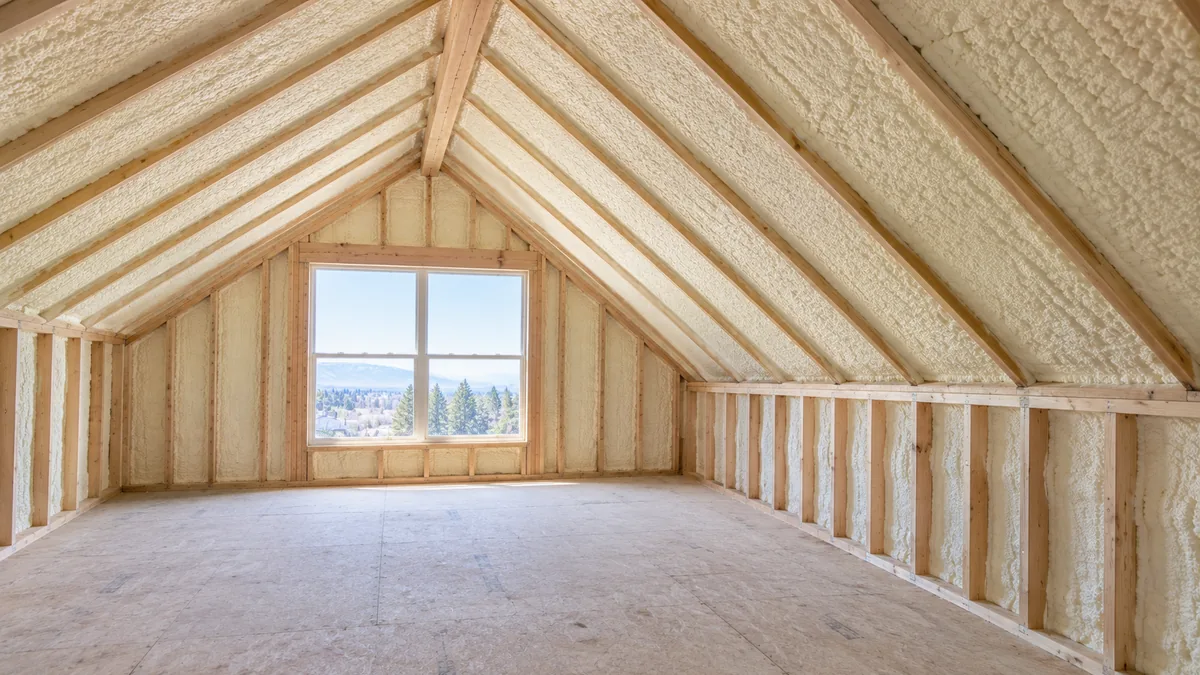
- Spray foam, open and closed cell
- Rigid board insulation
- Weatherstripping, house wrap, caulk, and expanding foam sealants
That last group matters more than it looks. Attic air sealing materials qualify, and sealing is the step that makes new R-value perform. A combined seal and insulate project puts both material costs under the same credit.
How much money is actually involved?
Work an example. A Greeley attic upgraded to R-49 costs $3,200, and the contractor's invoice shows $1,900 in materials and $1,300 in labor. Thirty percent of the material figure is $570, and that is the credit.
A larger project, say a $6,000 combination of crawl space foam and attic work, can produce enough qualifying material cost to reach the $1,200 annual ceiling. Anything past that ceiling in the same tax year does not add to the credit.
Because the cap resets annually, splitting a large project across two calendar years is a legitimate strategy. Attic this December, crawl space in January, two separate caps.
Want a materials and labor breakdown on your quote? Call (970) 414-2650
What does not qualify?
Installation labor does not qualify for the insulation and air sealing categories. That surprises people, since labor is often half the invoice. Some other 25C categories do include labor, but insulation is not one of them.
Also excluded: work on a new home you have not moved into, work on a property you rent to someone else, and general remodeling that happens to touch insulation. The improvement has to be to an existing home used as a residence.
How do you claim the insulation tax credit?
Four steps, and the first one happens before the work starts.
- Ask for materials to be itemized. Tell your contractor at quote time that you need the material cost broken out. Retrofitting that detail onto an invoice later is harder than asking up front.
- Keep the documentation. The invoice, the product data sheets, and any manufacturer certification statement. Store them with your tax records for the year.
- File Form 5695. Residential Energy Credits, filed with your federal return for the year the work was completed and placed in service.
- Carry the result to Form 1040. The credit reduces your tax liability directly.
Can you combine the credit with an Xcel Energy rebate?
Usually yes, and Colorado homeowners often do. A utility rebate and a federal credit come from different sources, so most people claim both on the same project.
One accounting detail: a rebate that reduces the purchase price generally reduces the cost basis you calculate the credit from. If Xcel sends $400 back on a $3,200 job, the credit is figured on the reduced amount. Walk through the utility side in the Xcel insulation rebate guide.
Verify the current year rules before you budget
Federal energy credit rules have been amended more than once in recent years, including changes to which years the credit applies to. Terms, caps, and end dates can all move.
Before you count a credit into a project budget, read the current IRS page for the Energy Efficient Home Improvement Credit and confirm it applies to the tax year your work is completed. A contractor cannot give tax advice, and neither can this page. Your tax professional can.
For what the work itself costs before any credit, the attic insulation cost guide and the spray foam cost guide carry current Northern Colorado ranges.
Insulation tax credit questions
How much is the federal insulation tax credit?
The 25C Energy Efficient Home Improvement Credit is worth 30 percent of the cost of qualifying materials, subject to a $1,200 annual cap that insulation shares with several other improvement categories. Confirm the current year rules on the IRS 25C page before you budget around it.
Does labor count toward the insulation tax credit?
For insulation and air sealing, no. The credit applies to the cost of the qualifying materials only. Ask your contractor to break materials out separately on the invoice so the number is easy to support later.
Do I need to itemize to claim the credit?
No. It is claimed on IRS Form 5695 and applies whether you itemize or take the standard deduction. It is nonrefundable, so it reduces the tax you owe rather than generating a refund on its own.
Can I claim the credit on a rental property?
Generally no. The credit is aimed at improvements to an existing home you use as a residence, not at property you rent out to others. A landlord should confirm their situation with a tax professional.
Credit terms referenced from the IRS Energy Efficient Home Improvement Credit page: irs.gov. Qualifying product criteria are listed at energystar.gov. This article is general information, not tax advice.
Get an itemized quote you can file with
Tell us the room, the square footage, and what it is doing wrong. You get a straight price range on the phone and a firm quote after we look at it.
Call (970) 414-2650Greeley, Evans, Windsor, Eaton, Johnstown, Milliken, Severance, and Weld County.