Attic Insulation in Greeley, CO Done to Colorado R-Values
Every February a few Greeley homeowners climb into the attic after a squirrel and find something worse: bare joists poking through eight inches of matted fiberglass. Attic insulation in Greeley, CO takes a Weld County house from R-19 up to the R-49 to R-60 this climate needs. Here is what it costs and how to read a quote.
What does an attic insulation job involve?
An attic upgrade is four steps, and the order matters more than the material. Skipping step one is why so many houses feel the same after a top-up.
- Assess. Measure current depth in several places, identify the material, check for water stains, rodent activity, and buried knob-and-tube wiring.
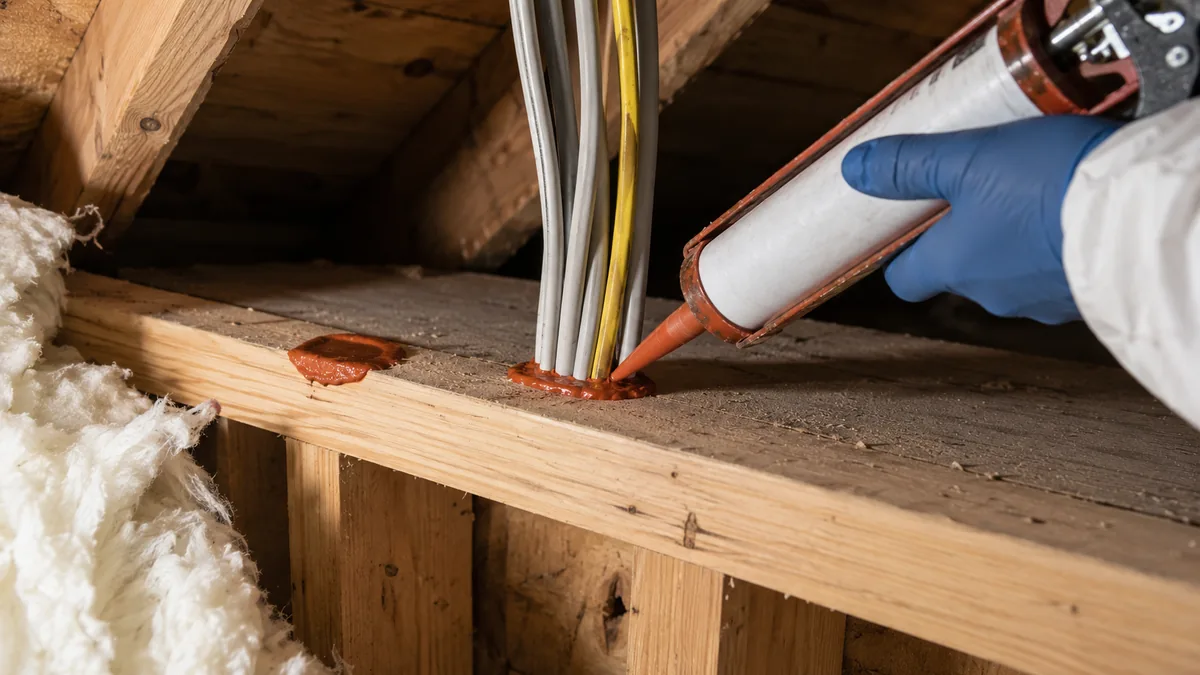
- Air seal. Foam and caulk the top plates, plumbing stacks, chimney chases, bath fan housings, wire penetrations, and the attic hatch itself.
- Protect the airflow. Install baffles at the eaves so the new depth cannot smother the soffit vents, and dam off can lights, flues, and the hatch.
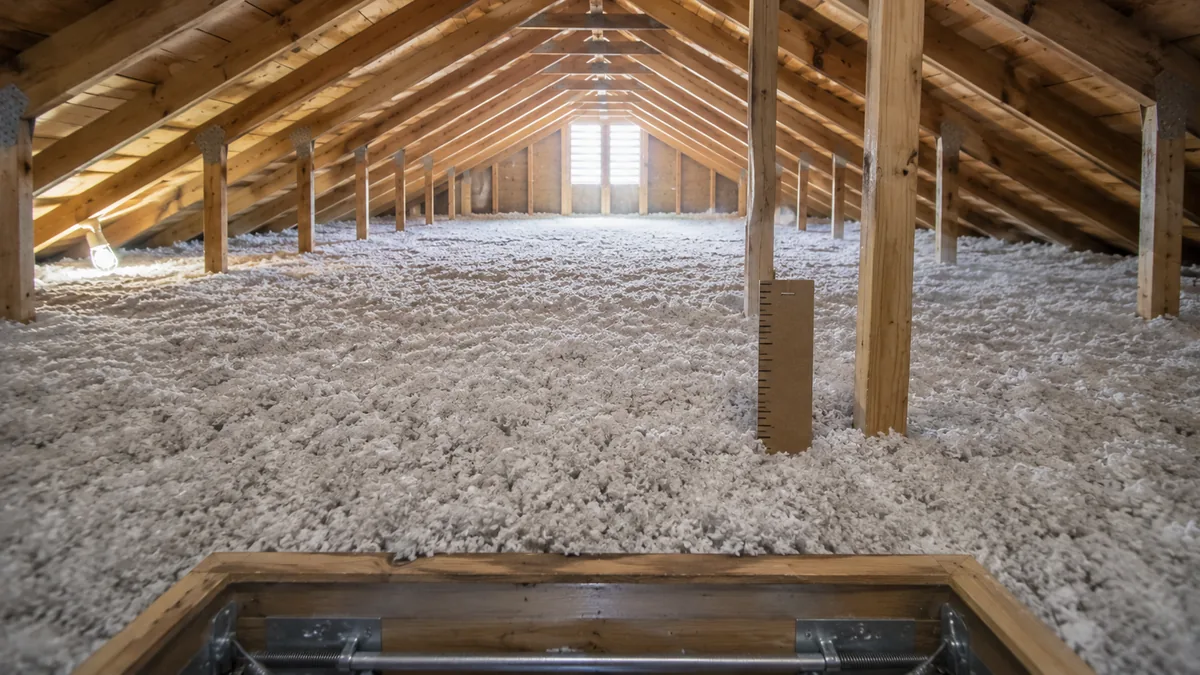
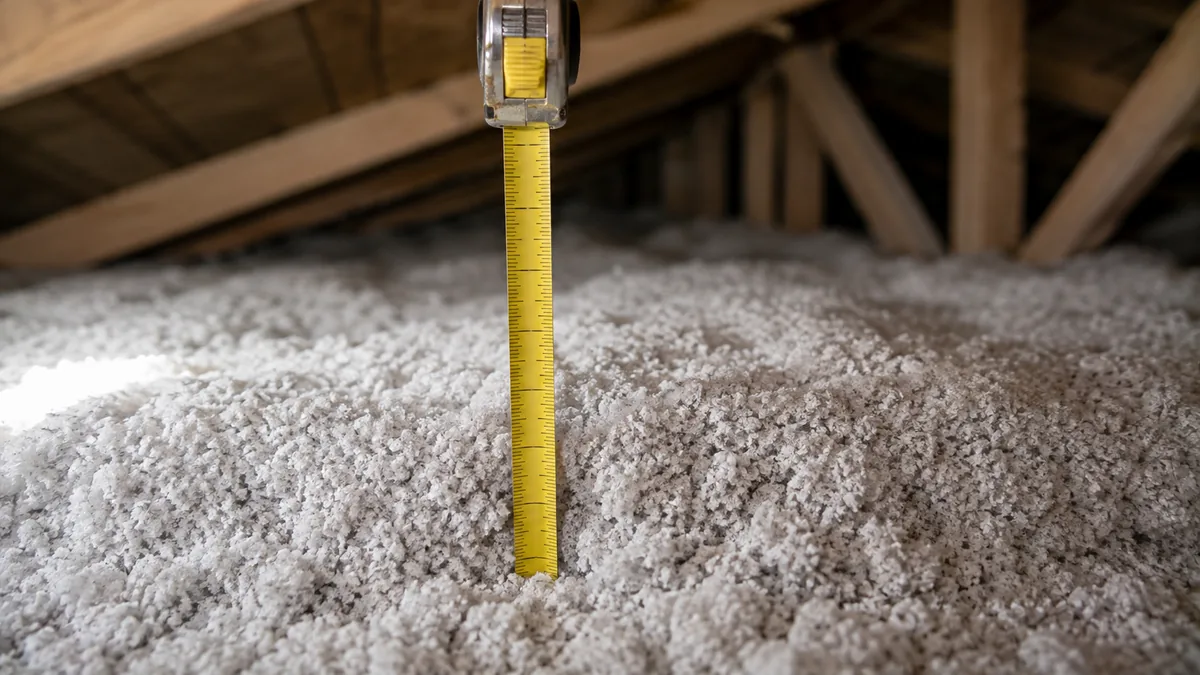
- Insulate. Blow the material to a marked depth, with depth rulers stapled to the framing so anyone can verify it later.
That last detail separates the good jobs from the fast ones. Depth rulers cost pennies and they are the only proof you have that you got the inches you paid for. Ask for them by name.
One more thing worth confirming before work starts: where the bath fans vent. A surprising number of Greeley houses have fans that dump warm, wet air straight into the attic instead of through the roof. Burying that under fresh insulation guarantees a moisture problem you will not find for years.
On some houses removal comes first. Wet, packed, or rodent-fouled material gets vacuumed out through a hose into a truck-mounted bag before anything new goes down. That is a separate line item, and it is covered on the insulation removal page.
Want someone to measure what is actually up there? Call (970) 414-2650
What are the warning signs your attic is underinsulated?
Attic problems announce themselves everywhere except the attic. Here is what Greeley homeowners describe before they ever climb up.
- Upstairs bedrooms that run five to ten degrees off the thermostat setting.
- A furnace that never seems to shut off between about 4 p.m. and bedtime.
- Ice building along the gutter line while the upper roof is clear.
- Snow that melts off your roof days before the neighbor's roof melts.
- Ceilings that feel cold to the touch in the same rooms every winter.
- Summer upstairs temperatures that stay high until well after midnight.
- Visible joist tops, or insulation you can see daylight patterns in.
- Dust streaks on the insulation surface, which mark the air leaks pulling through it.
That last one is the most useful and the least known. Dirty grey lines in otherwise clean insulation mean air is being filtered through the material at that spot. Every one of those streaks is a leak worth sealing.
Why do Greeley attics come up short?
Three local reasons, and they compound. Start with age. Much of the housing stock near downtown and the UNC campus dates to the Union Colony era and the decades after, built to standards that considered R-19 in the attic generous. Whole blocks along Highway 34 went up in the 1960s and 1970s with the same assumption.
Next, settling. Blown fiberglass loses loft over decades and cellulose settles roughly 20% from its installed depth. An attic that genuinely got R-38 in 1985 may measure R-25 today without anything going wrong. Nobody goes up to check.
Third, the wind. Chinook events push warm downslope air across Weld County at highway speed, and loose fill insulation does nothing to stop air movement. A gust that pressurizes the attic can literally drift the material away from the eaves, leaving the perimeter thin where the ceiling meets the exterior wall. That perimeter is where cold rooms come from.
Then the hot half of the year arrives. A Greeley attic can hit 140 degrees in July, and thin insulation lets that heat straight into the bedrooms. The same upgrade that fixes January fixes August, which is a point most quotes forget to make.
What R-value does an attic need in Greeley?
Greeley is in DOE climate zone 5B. The recommended attic range for this zone is R-49 to R-60, and R-60 is the practical target on any attic where the depth fits. R-value is a measure of resistance, so more is better right up until you run out of room at the eaves.
| Material | Depth for R-49 | Depth for R-60 | Typical installed cost |
|---|---|---|---|
| Blown-in fiberglass | About 17 inches | About 21 inches | $1.00 to $2.20 per sq ft |
| Blown-in cellulose | About 14 inches | About 17 inches | $1.40 to $2.80 per sq ft |
| Open cell spray foam on the roof deck | About 14 inches | About 17 inches | $0.45 to $0.75 per board foot |
| Closed cell spray foam on the roof deck | About 8 inches | About 9 inches | $1.00 to $1.50 per board foot |
If you want the reasoning behind those targets rather than just the numbers, our Colorado attic R-value guide goes deeper.
Notice that closed cell foam hits R-60 in about half the inches of blown fiberglass. That is why foam is the answer in tight rafter bays and vaulted ceilings, and why it is overkill on an open attic floor where inches are free. The Department of Energy's insulation guidance lays out the zone recommendations in full.
What does attic insulation in Greeley, CO cost?
Blown-in attic work in Greeley runs $1.00 to $2.80 per square foot installed, and most whole-attic projects land between $1,500 and $4,000. The spread comes from square footage, target depth, whether removal is needed, and how bad the access is.
| Scope | Typical range | Notes |
|---|---|---|
| 1,000 sq ft attic, top-up to R-49 | $1,200 to $2,400 | Existing material stays |
| 1,500 sq ft attic, top-up to R-60 | $2,000 to $3,600 | Most common Greeley job |
| 1,500 sq ft attic, remove and replace | $3,500 to $6,000 | Adds $1.00 to $2.00 per sq ft removal |
| Air sealing before insulating | $350 to $1,500 | Priced separately, done first |
| Baffles, dams, and can light covers | $150 to $600 | Depends on vent and fixture count |
For a deeper walkthrough with more scenarios, see the Greeley attic insulation cost guide. If you are weighing foam instead, the cost calculator will price the same attic both ways.
What drives the price up
- Square footage. The single biggest factor, and the easiest to verify against your floor plan.
- Target R-value. Going to R-60 instead of R-49 adds roughly 20% more material.
- Removal. Old material out first adds $1.00 to $2.00 per square foot and a full day.
- Access. A scuttle hole in a closet ceiling costs more in labor than a pull-down stair in the garage.
- Roof pitch and height. A low 4:12 roof means crawling on your stomach at the eaves.
- Fixture count. Every recessed light, flue, and bath fan needs a dam or a cover built around it.
- Air sealing scope. Priced separately, and worth every dollar of it.
Have a square footage in mind? Get a real range in one call. Call (970) 414-2650
Blown-in or spray foam: which belongs in your attic?
This decision comes down to where you want the boundary between inside and outside to live. Both answers are legitimate, and the cheaper one is right more often than the internet suggests.
Insulate the attic floor with blown-in when the attic is vented, the floor is open, and there is nothing up there you need to keep warm. This is the standard Greeley house.
You get R-60 for $2,000 to $3,600 on a typical attic, the vents keep doing their job, and the material is easy to add to later. Cellulose or fiberglass blown-in both work; the choice is mostly about fire performance, density, and price.
Insulate the roof deck with foam when the attic contains ducts or an air handler, when the ceiling is vaulted with no attic floor to speak of, when the framing is too irregular for loose fill, or when ice dams have resisted sealing the ceiling plane and every other fix.
This is a conditioned attic, and it costs more because you are insulating a bigger surface with a pricier material.
A blended approach handles most stubborn houses: air seal the ceiling plane, foam the short kneewall or the tricky vaulted section, and blow depth across everything flat. You spend foam money only where foam is the only thing that works.
Find out what your attic actually needs
Tell us the room, the square footage, and what it is doing wrong. You get a straight price range on the phone and a firm quote after we look at it.
Call (970) 414-2650Greeley, Evans, Windsor, Eaton, Johnstown, Milliken, Severance, and Weld County.
Which rebates and credits apply to attic insulation?
Attic work is the most rebate-friendly insulation project there is, because it is easy to document and the savings are easy to model. Two programs are worth chasing.
Xcel Energy insulation rebates
Greeley and the surrounding Weld County towns are largely Xcel Energy territory, and Xcel runs rebate programs covering insulation and air sealing for Colorado customers. Rebate levels and qualifying measures shift year to year, so check Xcel's current rebate sheet on their residential rebates page before budgeting around a figure.
Whoever does the work should give you an invoice showing square footage, material, and the before and after R-values, since the application will ask for all three.
The federal 25C tax credit
Attic insulation is one of the categories named in the Energy Efficient Home Improvement Credit, which hands back 30% of qualifying material costs, up to $1,200 per year. Labor does not count, new construction does not count, and the house has to be the one you live in.
The cap resets annually, so doing the attic this year and the crawl space next year lets you claim it twice. Our 2026 tax credit explainer covers the filing side, and the official text sits on the IRS page for the Energy Efficient Home Improvement Credit.
What should you expect on attic install day?
A straightforward top-up on a Greeley house is a four to seven hour job. Removal and replacement runs one to two full days.
- Arrival and setup. The blower truck parks close to the access point and a hose runs in through a window or door with the opening masked off.
- Protection. Floors and the path to the hatch get covered. The area under the attic access gets sheeted in plastic.
- Removal, if scheduled. Old material vacuums out into a collection bag on the truck.
- Air sealing. Penetrations get foamed and caulked while the attic floor is still visible. This is the step you cannot do later.
- Baffles and dams. Soffit baffles at every rafter bay, dams around flues, can lights, and the hatch.
- Blowing. Material goes in from the far corner back toward the hatch, to marked depth rulers.
- Walkthrough. Depth verified against the rulers, hatch insulated and weatherstripped, debris hauled, invoice itemized.
Expect some noise from the blower and a light dust smell for a day or two. Cover anything stored in the attic or move it out beforehand, because loose fill goes everywhere by design. Nobody needs to leave the house for a blown-in job.
Cold upstairs bedroom? That is usually an attic problem. Call (970) 414-2650
Attic insulation questions Greeley homeowners ask
How much does attic insulation cost in Greeley, CO?
Most whole-attic projects in Greeley run $1,500 to $4,000, or about $1.00 to $2.80 per square foot for blown-in material. A straight top-up on a 1,500 square foot attic usually lands near $2,000 to $3,600. Removing contaminated or water-damaged material first adds $1.00 to $2.00 per square foot.
What is the recommended R-value for an attic in Colorado?
Greeley sits in DOE climate zone 5B, where the recommended attic range is R-49 to R-60. That is roughly 14 to 17 inches of cellulose or 17 to 21 inches of blown fiberglass. A lot of pre-1980 Weld County attics still measure R-19 or less, which is why the upgrade is such a common project here.
Is blown-in or spray foam better for my attic?
For a standard vented attic with a flat, open floor, blown-in is better value by a wide margin.
Spray foam is better when the attic holds ductwork or an air handler, when the roof line is vaulted, or when you want the attic brought inside the heated envelope. Many Greeley houses get the best result from air sealing plus blown-in rather than either one alone.
Will new attic insulation stop ice dams?
Only if the air leaks get sealed too. Ice dams form when warm indoor air escapes into the attic, melts snow on the roof deck, and the water refreezes at the cold eave.
Piling insulation on top of unsealed can lights, bath fans, and top plates slows the heat loss but does not stop it. Seal first, insulate second, and confirm the soffit vents are not buried. There is a full walkthrough in ice dams in Greeley, causes and fixes.
Do you have to remove old attic insulation before adding more?
Usually not. Dry, uncontaminated fiberglass or cellulose can be topped up directly, and that saves real money. Removal is warranted when the material is wet, moldy, fire or smoke damaged, full of rodent droppings, or so compacted it is doing nothing. Old vermiculite is a separate case and needs testing before anyone touches it.
How do I know if my attic has enough insulation?
Put your head through the hatch with a flashlight and a tape measure. If you can see the tops of the ceiling joists, you are almost certainly under R-30. Measure the depth in three spots, since insulation drifts. Cold rooms, an uneven snow melt pattern on the roof, and a furnace that runs constantly on a windy night are the other tells.
Other insulation services in Greeley
The attic is the highest-return place to start on most Weld County houses. Here is everything else that gets done, with typical ranges so you can plan a sequence.
-
Spray Foam Insulation
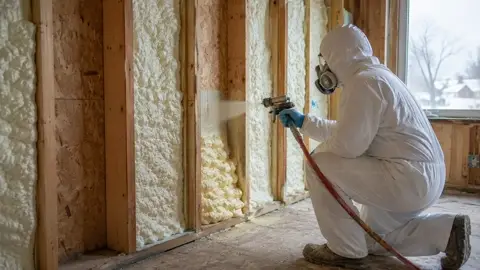
Open and closed cell spray foam for attics, walls, and rim joists across Weld County.
Typical: $0.45-$1.50 per board foot installed
-
Closed Cell Spray Foam
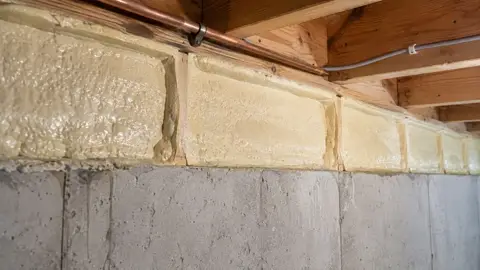
R-6.5 to R-7 per inch with a built-in vapor barrier, for crawl spaces, rim joists, and metal buildings.
Typical: $1.00-$1.50 per board foot installed
-
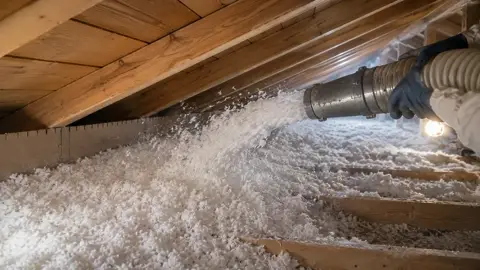
Blown-In Insulation
Cellulose and fiberglass blown-in for attics and walls, the workhorse upgrade for pre-1980 homes.
Typical: $1.00-$2.80 per sq ft installed
-
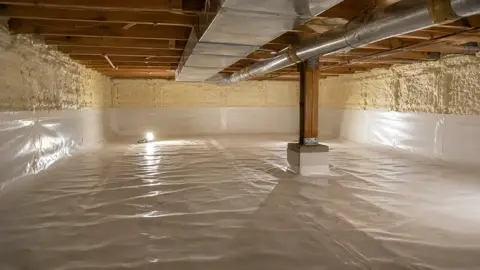
Crawl Space Insulation
Sealed, insulated crawl spaces that stop cold floors and frozen pipes.
Typical: $1,500-$6,000 typical project
-
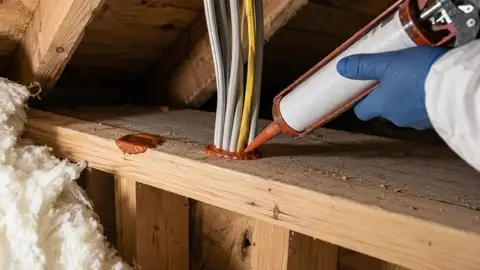
Attic Air Sealing
Close the gaps chinook winds find, the step that makes new insulation actually work.
Typical: $350-$1,500 typical project
-
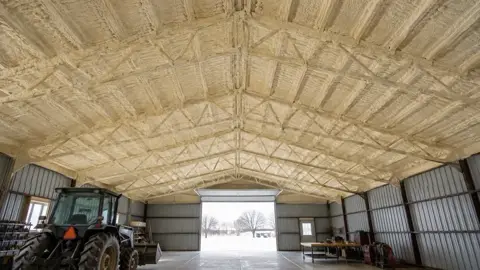
Metal Building Insulation
Spray foam for pole barns, shops, and ag buildings, ending condensation drip for good.
Typical: $1.00-$3.00 per sq ft for closed cell
-
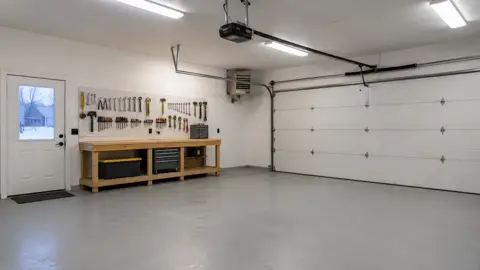
Garage Insulation
Make an attached or detached garage usable in January, and stop it from chilling the rooms above.
Typical: $800-$3,500 typical project
-
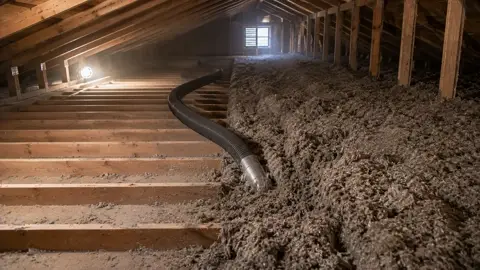
Insulation Removal
Safe removal of old, damaged, or pest-contaminated insulation before an upgrade.
Typical: $1.00-$2.00 per sq ft removed
-
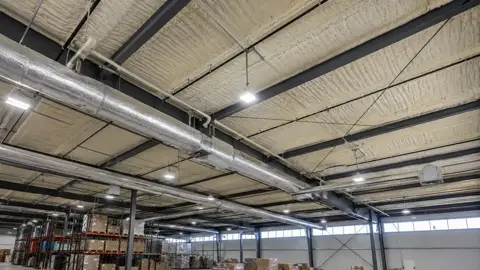
Commercial Insulation
Warehouses, shops, and light-commercial buildings across Greeley and Weld County.
Typical: quoted per project
The Greeley insulation overview explains which of these usually pay back first on an older house.
Ready for a number on your attic? It takes one phone call. Call (970) 414-2650
Attic Insulation Near Greeley
Greeley is the base, but the service area covers the whole county. Pick the town closest to you for what the job usually looks like there.
- Attic Insulation in Evans Highway 85 corridor
- Windsor insulation contractors newer high-end builds
- attic insulation for Eaton homes and shops Highway 85 farm town
- our Johnstown, CO service page I-25 corridor growth
- attic insulation near Milliken ag-and-commuter town
- what we handle in Severance one of Colorado's fastest-growing small towns
Calls also come in from Kersey, LaSalle, Ault, and Platteville, and the smaller places in between along Highway 85.
Get your Greeley attic measured and priced
Tell us the room, the square footage, and what it is doing wrong. You get a straight price range on the phone and a firm quote after we look at it.
Call (970) 414-2650Greeley, Evans, Windsor, Eaton, Johnstown, Milliken, Severance, and Weld County.