Closed Cell Spray Foam in Greeley, CO: What It Costs and Where It Wins
Which insulation gives the most R-value in the fewest inches and doubles as a vapor barrier? Closed cell spray foam in Greeley, CO. This page is for Weld County homeowners, builders, and shop owners choosing between closed cell and open cell, with real per board foot pricing and an honest comparison table.
What makes closed cell spray foam different?
Both spray foams start as two liquids that meet at the gun and expand on contact. The difference is what happens to the bubbles. In closed cell foam the cells stay sealed against one another, which makes the cured foam dense, rigid, and closed to air and water vapor.
That structure buys four things at once. You get R-6.5 to R-7 per inch, roughly double open cell. You get a vapor retarder built into the insulation at two inches or more.
You get a material that sheds bulk water instead of soaking it up. And you get a measurable increase in the rack strength of the wall it is bonded to.
The tradeoff is density and price. Closed cell weighs about two pounds per cubic foot against open cell's half pound, and it costs roughly twice as much per inch installed. You are buying performance per inch, which is exactly what a tight cavity or a crawl space wall needs.
One more practical difference: closed cell cures hard. You can trim it flush with a saw but you are not vacuuming it back out. Decide the assembly before it goes on, not after.
Trying to figure out which foam belongs in your project? Call (970) 414-2650
Closed cell vs open cell spray foam, side by side
This is the comparison most spray foam pages skip. Read the row that matches your project, not the whole column.
| Property | Closed cell | Open cell |
|---|---|---|
| R-value per inch | R-6.5 to R-7 | R-3.5 to R-3.7 |
| Vapor barrier | Yes, at 2 inches or more | No, stays vapor permeable |
| Density | About 2 lb per cubic foot, rigid | About 0.5 lb per cubic foot, spongy |
| Typical installed cost | $1.00 to $1.50 per board foot | $0.45 to $0.75 per board foot |
| Adds structural rack strength | Yes, measurably | No |
| Water behavior | Rejects bulk water, will not wick | Absorbs and holds water |
| Best uses here | Crawl spaces, rim joists, metal buildings, below grade | Attic decks, interior walls, sound control |
| Where it is the wrong pick | Big open attics on a budget | Anywhere moisture drives through the assembly |
The short version: closed cell buys you moisture control and inches, open cell buys you cheap volume. A 6 inch rafter bay filled with open cell gets you about R-21. The same bay with 3 inches of closed cell gets you about R-20 and leaves room for nothing else, but it also stops vapor drive cold.
Cost per R-value is closer than people expect. Open cell is cheaper per inch, but you need nearly twice the inches for the same R-value, so the gap narrows once you price a target rather than a thickness. Where closed cell truly costs more is when the cavity has room to spare and you do not need the vapor performance.
For a broader look at both products in one place, the spray foam insulation overview for Greeley covers open cell applications in more depth.
When does a Greeley building need closed cell?
There are specific signals, and they are physical. If you see any of these, closed cell is probably the right tool rather than a preference.
- Water beading or frost forming on the underside of a metal roof on a cold morning.
- A crawl space with a musty smell, damp soil, or a floor above that is always cold.
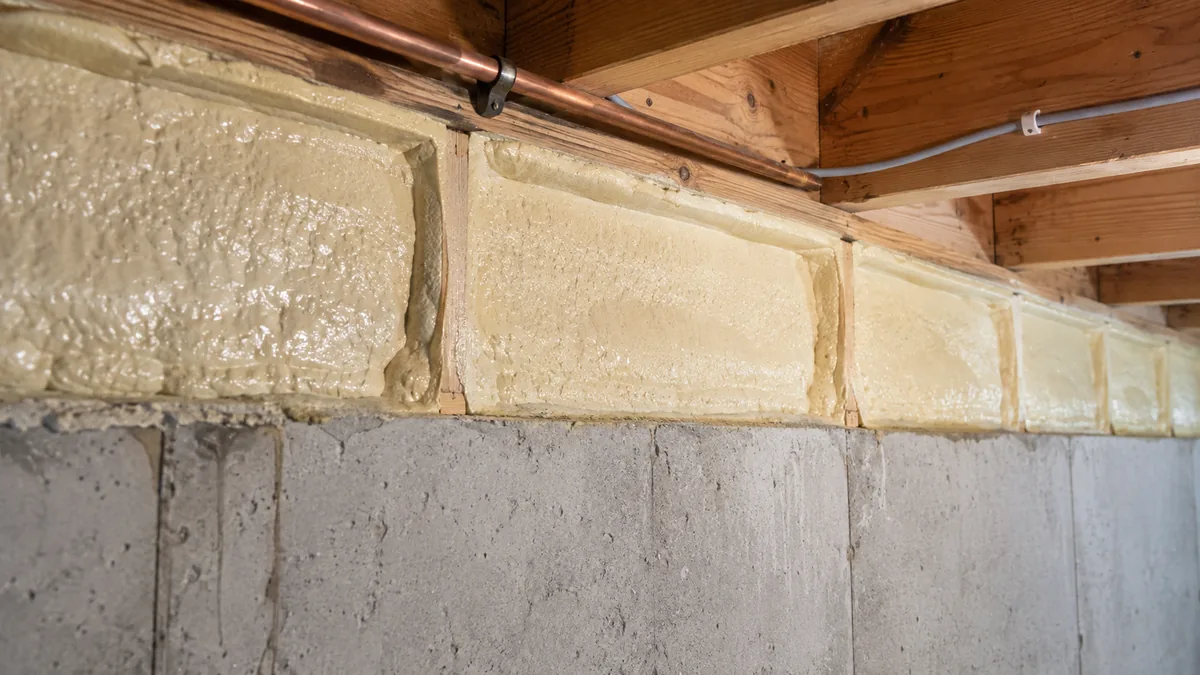
- Frost, mildew, or wet framing on the basement rim joist in January.
- Concrete or block walls below grade that you want to insulate without building a stud wall.
- A remodel with 2x4 walls where you need better than R-13 and have no room to go thicker.
- A shop or pole barn where fiberglass batts have already sagged and stained.
Those all describe moisture moving through an assembly. Insulation that lets vapor pass simply relocates the problem to the first cold surface it finds. Closed cell stops the drive rather than moving it.
Why moisture drives these problems in Weld County
Colorado is dry, which fools people into thinking vapor is not an issue here. The problem is not humidity outdoors, it is the temperature difference across the wall. When it is 5 degrees outside and 68 inside, water vapor from cooking, showers, and breathing pushes toward the cold side and condenses wherever it meets a surface below the dew point.
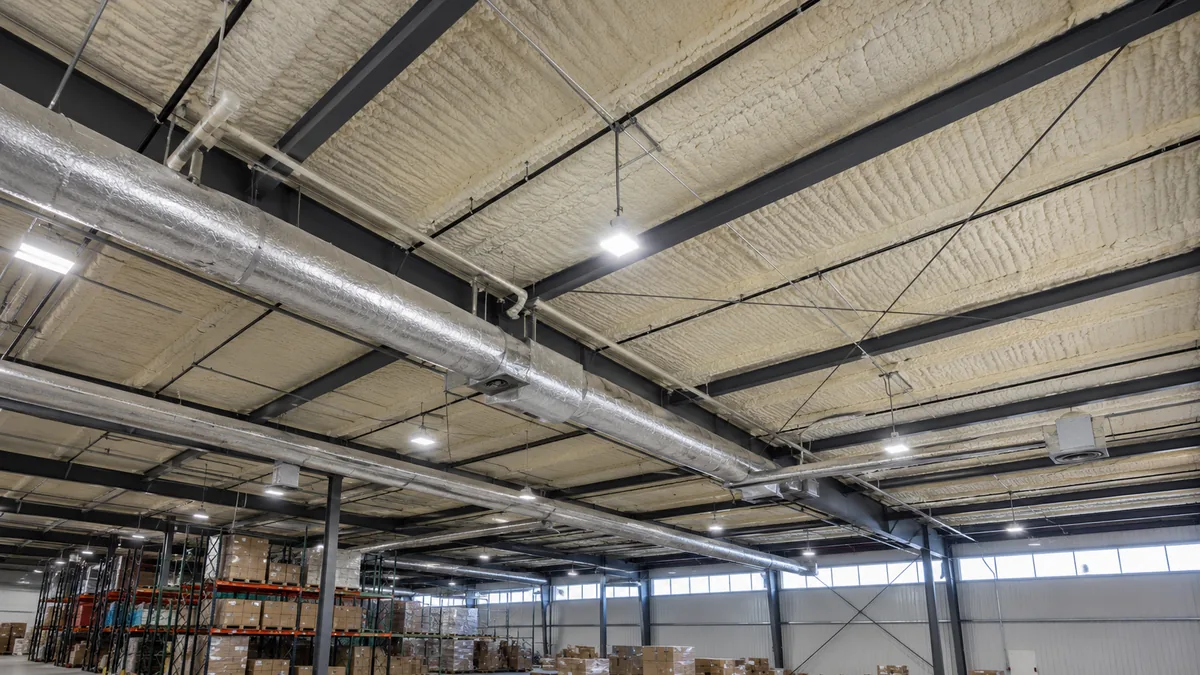
In Greeley that surface is usually steel or concrete. Metal roof decks on the shops and pole barns scattered along Highway 85 and the county roads are the classic case: the building rains on itself with the doors closed. Concrete crawl space walls and basement rim joists do the same thing more quietly.
Chinook winds add pressure to the picture. A warm downslope gust does not just cool the house by convection, it drives air through every unsealed seam, carrying vapor with it. Closed cell handles both jobs at once because it is an air barrier and a vapor retarder in one pass.
Housing age closes the loop. Pre-1980 homes near downtown and UNC often have no rim joist insulation at all, just a board and a stack of bricks. That band is the single leakiest square footage in most older Greeley basements.
What does closed cell spray foam in Greeley, CO cost?
Closed cell is quoted at $1.00 to $1.50 per board foot installed, where a board foot is one square foot at one inch of depth. Two inches over 1,000 square feet is 2,000 board feet, so the arithmetic is honest and easy to check on a quote.
| Project | Typical installed range | Notes |
|---|---|---|
| Rim joist band, average Greeley basement | $800 to $2,000 | Usually 2 to 3 inches |
| Crawl space walls and rim | $1,500 to $6,000 | Often paired with a floor vapor barrier |
| Pole barn or shop, 30 by 40 | $5,200 to $7,800 | Roof deck and walls, about 2,600 sq ft at 2 inches |
| Wall cavities during a remodel | $2.00 to $4.50 per sq ft | Depth sets the number |
| Cathedral or vaulted ceiling | $3.00 to $4.50 per sq ft | Access and pitch add labor |
A quote that does not state depth is not a quote. Ask for board feet or inches on every line. If you want to model a scenario yourself first, the foam cost calculator handles depth and area, and the Greeley cost guide works through full-house examples.
What drives closed cell pricing
- Inches, not square feet. Doubling depth doubles material cost. This is the main lever.
- Overhead spraying. Roof decks and ceilings are slower and harder than walls.
- Access. A 24 inch crawl space hatch or a barn with equipment parked in it adds hours.
- Prep and masking. Closed cell overspray is permanent, so protection takes longer than it does for blown-in.
- Temperature. Cold substrate needs the rig run hotter and slower, so deep winter jobs can price higher.
- Minimum charge. Most rigs have a floor around $1,500 to $2,000 because mobilization costs the same either way.
When is closed cell the wrong choice?
Selling closed cell for every job is easy and wrong. There are four situations where spending the money on it makes your house worse off than the alternative.
A wide open attic floor. If you have joists you can walk between and a target of R-49 to R-60, blown-in gets you there for $1,500 to $4,000. Closed cell across the same area would cost several times that for no extra comfort. Put the savings into air sealing the attic penetrations and you come out ahead on both counts.
A roof that already leaks. Foam bonded to wet sheathing hides the water instead of stopping it, and by the time a stain shows on the ceiling the deck may be gone. Fix the roof, let it dry, then foam.
Sound control between rooms. Open cell is the better acoustic material because it is soft and porous. Closed cell is rigid and transmits sound reasonably well.
An assembly you plan to change. If a wall is coming out in three years or wiring may need rerouting, hard foam turns a small job into a demolition project. In that case dense pack or batts stay the smarter bet.
Want your depth and square footage turned into a real number? Call (970) 414-2650
Price a closed cell job on your building
Tell us the room, the square footage, and what it is doing wrong. You get a straight price range on the phone and a firm quote after we look at it.
Call (970) 414-2650Greeley, Evans, Windsor, Eaton, Johnstown, Milliken, Severance, and Weld County.
Do rebates and tax credits cover closed cell foam?
Yes, when the work is on an existing home. Two programs stack, and both want paperwork that most homeowners do not think to ask for until it is too late.
Xcel Energy insulation rebates
Xcel Energy serves most of Greeley and the surrounding towns, and it runs rebates for insulation and air sealing improvements on Colorado homes. Program amounts and qualifying measures move from year to year, so check Xcel's current rebate sheet rather than trusting a contractor's memory.
Whoever does the work should hand you an invoice listing square footage, foam type, and installed R-value, because that is what the rebate application asks for.
The federal 25C credit
Foam bought for an existing home you occupy qualifies under 25C, the Energy Efficient Home Improvement Credit. The value is 30% of qualifying material costs, capped at $1,200 per year, with labor and new construction both outside it.
Since the cap resets each year, a large project split across a December and a January can claim it twice. Full rules are on the IRS page for the Energy Efficient Home Improvement Credit, and our plain-English tax credit article covers what to keep on file.
For background on the material itself, start with what closed cell spray foam actually is, or compare it against batts in our fiberglass versus spray foam breakdown.
What does a closed cell install day look like?
Closed cell is the more demanding of the two foams to install correctly, and the day reflects that.
- Substrate check. Surfaces must be dry and clean. Wet sheathing or dusty concrete kills adhesion, so the job stops if something is soaked.
- Prep. Everything within reach of overspray gets masked. Vehicles and tools leave the shop.
- Rig warm-up. The proportioner brings both chemicals to temperature and pressure. Off-ratio foam is the number one install failure.
- Lift one. Foam goes on in passes of about two inches. Thicker lifts trap heat and can scorch in the middle.
- Cool and lift two. If more depth is needed, the crew waits between passes rather than piling it on.
- Depth verification. Spot checks with a depth gauge, not eyeballs. Ask to see this.
- Trim, cure, and vent. Overspray shaved flush, the space stays vacant through the manufacturer's reoccupancy window, commonly around 24 hours.
A note on fire code: closed cell in living space usually needs a thermal barrier over it, typically half inch drywall or an approved coating. In an unoccupied attic or crawl space an ignition barrier may be enough. This is a real code question, not a sales upsell, so make sure it is addressed on the quote.
Building new or remodeling? Foam is cheapest before drywall. Call (970) 414-2650
Closed cell spray foam questions from Weld County
What is closed cell spray foam?
Closed cell spray foam is a rigid, high density foam whose bubbles are sealed shut against each other. That closed structure is what gives it R-6.5 to R-7 per inch, blocks water vapor at two inches, and lets it add real stiffness to a wall. Open cell foam has broken bubbles, so air and vapor pass through and it stays soft.
How much does closed cell spray foam cost in Greeley, CO?
Figure $1.00 to $1.50 per board foot installed, which is typical for Northern Colorado. On a per square foot basis at the depths most jobs use, that works out to about $2.00 to $4.50 per square foot. A basement rim joist band commonly runs $800 to $2,000, and a 30 by 40 shop lands around $5,200 to $7,800.
Is closed cell spray foam worth the extra money over open cell?
It is worth it where you need vapor control, water resistance, or the most R-value in the fewest inches. Crawl spaces, rim joists, metal buildings, and below-grade walls all qualify. It is not worth it for a wide open attic floor, where blown-in gets you to R-60 for a fraction of the price.
Does closed cell spray foam need a vapor barrier in Colorado?
No. Two inches of closed cell is already a Class II vapor retarder, so adding poly over it can trap moisture between two barriers. That is one of the most common install mistakes made in climate zone 5B. Open cell is the one that needs a coating or a smart membrane in certain assemblies.
What are the downsides of closed cell spray foam?
Three real ones. It costs about twice open cell per inch. It cannot be pulled back out easily if something needs to change later, since it bonds hard to the substrate.
And because it seals the building tight, a house that had no ventilation plan can end up with stale air. None of those are dealbreakers, but you should hear them before you sign.
Can closed cell spray foam be applied over a metal roof deck?
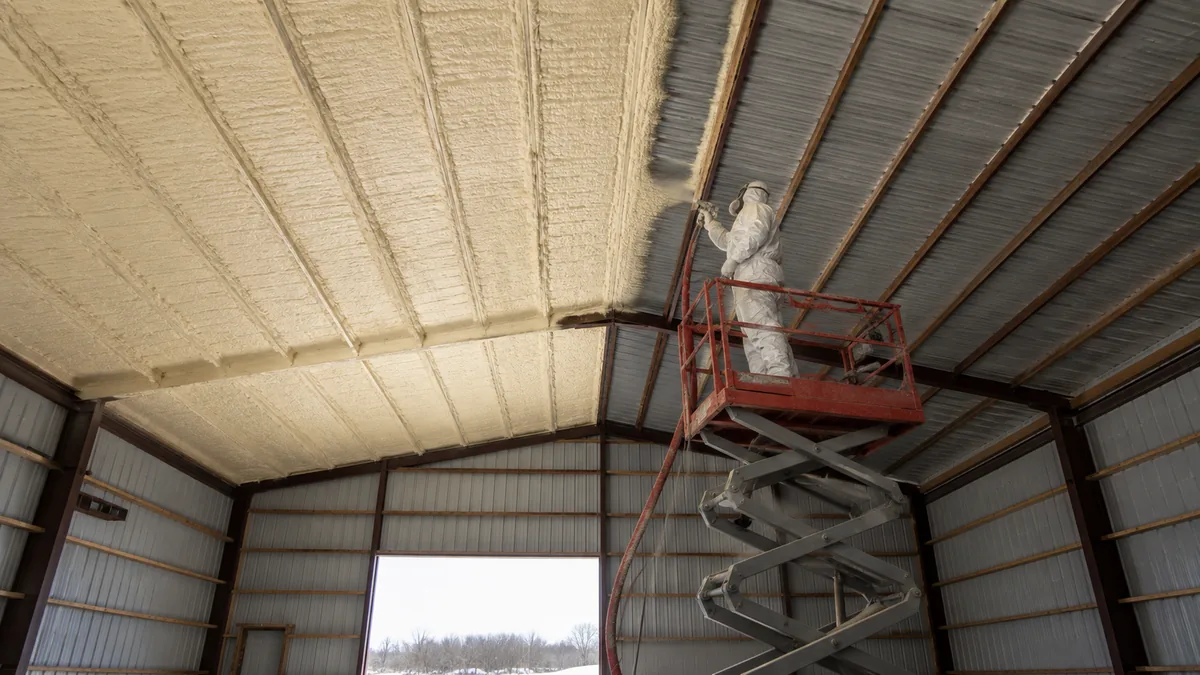
Yes, and that is one of its best uses in Weld County. Sprayed directly to the underside of the steel, it stops condensation from forming on the cold metal, which is what makes shops and pole barns rain on the equipment. Two inches is the usual starting point. See the metal building insulation page for how those jobs run.
Other insulation services in Greeley
Closed cell solves a narrow set of problems very well. Here is everything else on offer around Greeley and Weld County, with typical ranges attached.
-
Spray Foam Insulation
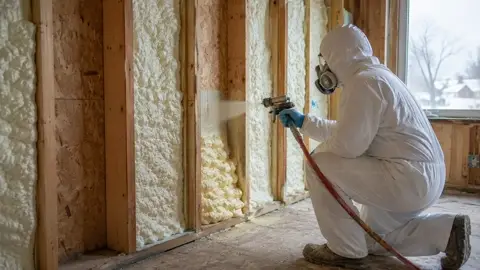
Open and closed cell spray foam for attics, walls, and rim joists across Weld County.
Typical: $0.45-$1.50 per board foot installed
-
Attic Insulation
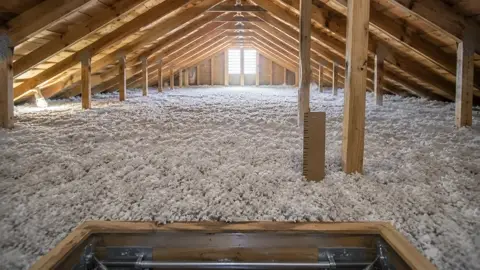
Bring older Greeley attics from R-19 up to the R-49 to R-60 Colorado actually needs.
Typical: $1,500-$4,000 typical whole-attic project
-
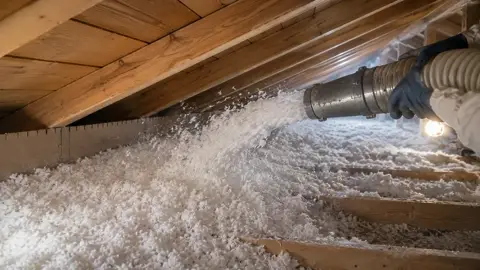
Blown-In Insulation
Cellulose and fiberglass blown-in for attics and walls, the workhorse upgrade for pre-1980 homes.
Typical: $1.00-$2.80 per sq ft installed
-
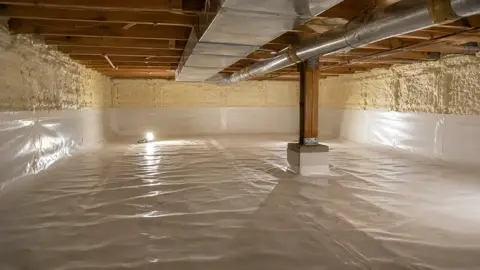
Crawl Space Insulation
Sealed, insulated crawl spaces that stop cold floors and frozen pipes.
Typical: $1,500-$6,000 typical project
-
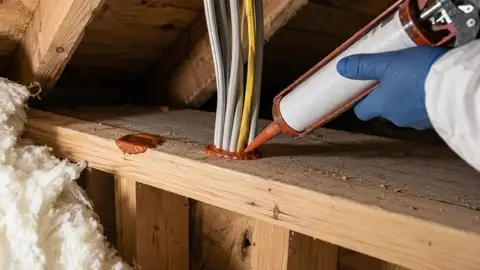
Attic Air Sealing
Close the gaps chinook winds find, the step that makes new insulation actually work.
Typical: $350-$1,500 typical project
-
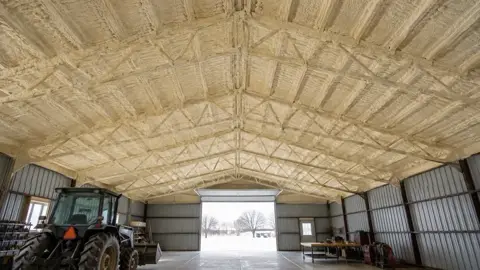
Metal Building Insulation
Spray foam for pole barns, shops, and ag buildings, ending condensation drip for good.
Typical: $1.00-$3.00 per sq ft for closed cell
-
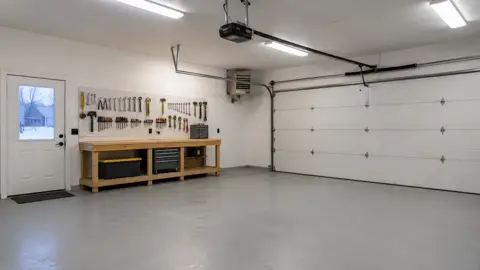
Garage Insulation
Make an attached or detached garage usable in January, and stop it from chilling the rooms above.
Typical: $800-$3,500 typical project
-
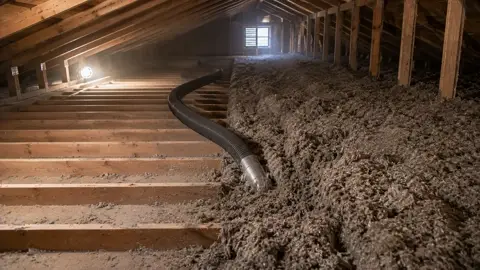
Insulation Removal
Safe removal of old, damaged, or pest-contaminated insulation before an upgrade.
Typical: $1.00-$2.00 per sq ft removed
-
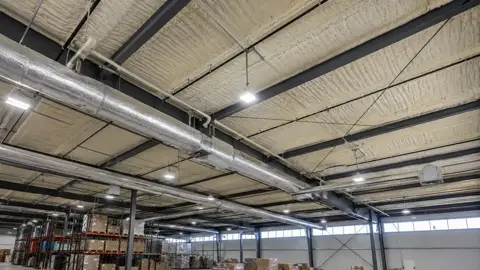
Commercial Insulation
Warehouses, shops, and light-commercial buildings across Greeley and Weld County.
Typical: quoted per project
The Greeley insulation services hub shows how these pieces usually get sequenced on one house.
Get a straight closed cell number for your crawl space, shop, or rim joist. Call (970) 414-2650
Closed Cell Spray Foam Near Greeley
Greeley is the base, but the service area covers the whole county. Pick the town closest to you for what the job usually looks like there.
- Closed Cell Spray Foam in Evans Highway 85 corridor
- Windsor insulation contractors newer high-end builds
- closed cell spray foam for Eaton homes and shops Highway 85 farm town
- our Johnstown, CO service page I-25 corridor growth
- closed cell spray foam near Milliken ag-and-commuter town
- what we handle in Severance one of Colorado's fastest-growing small towns
Calls also come in from Kersey, LaSalle, Ault, and Platteville, and the smaller places in between along Highway 85.
Talk closed cell foam with someone who works in Weld County
Tell us the room, the square footage, and what it is doing wrong. You get a straight price range on the phone and a firm quote after we look at it.
Call (970) 414-2650Greeley, Evans, Windsor, Eaton, Johnstown, Milliken, Severance, and Weld County.