Blown In Insulation in Greeley, CO for Attics and Walls
Imagine pouring a thick, even blanket into every corner of your attic without cutting a single batt. That is what blown in insulation in Greeley, CO does, and it is the workhorse upgrade for the pre-1980 houses that fill this town. Here are real prices for Weld County homeowners and landlords, plus the downsides nobody advertises.
How does blown in insulation work?
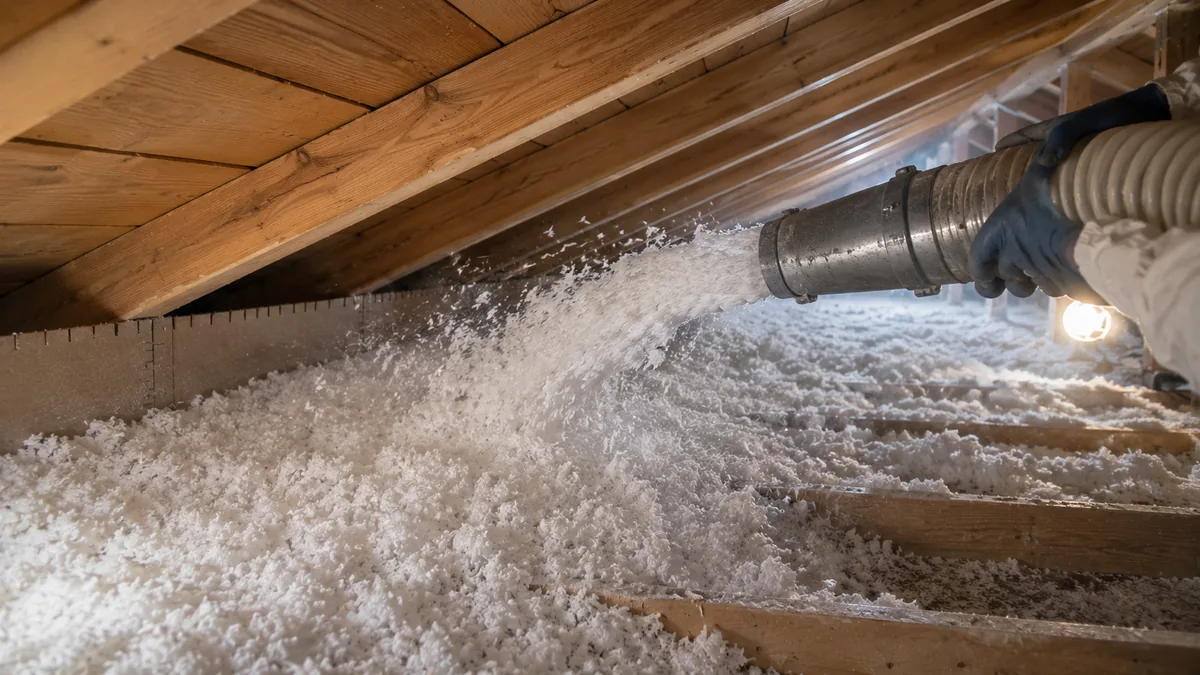
A hopper on a truck or trailer breaks up compressed insulation and feeds it into a long hose. An installer stands at the far end of the attic and works backward, laying down an even layer to a marked depth.
Because the material is loose, it flows around wiring, bracing, and every awkward corner that a batt would have to be cut around.
Two materials go through that hose. Cellulose is recycled paper treated with borate, and it delivers R-3.2 to R-3.8 per inch. Fiberglass is spun glass fiber at R-2.2 to R-2.7 per inch. Both are legitimate; they just cost and behave differently.
The same equipment does walls, using a different technique. Dense pack forces material into a closed cavity through a fill tube until it reaches about 3.5 pounds per cubic foot. At that density it cannot settle and it slows air movement considerably, which is the only realistic way to insulate an existing Greeley wall without tearing off drywall.
What blown in insulation does not do is seal air leaks. It slows heat conduction, and that is it. Any crew that blows twenty inches of fluff over unsealed can lights and calls the job finished has left most of your money on the table.
Wondering whether your attic needs a top-up or a tear-out? Call (970) 414-2650
When is blown in insulation the right call?
There is a clear profile for this job, and a lot of Greeley houses fit it exactly.
- An attic with an open, walkable floor and joists you can see the tops of.
- Existing insulation that is dry and clean but only eight to twelve inches deep.
- Upstairs rooms that run several degrees off the thermostat all winter.
- A 1950s to 1970s house with empty wall cavities and one wall that is always cold.
- A rental you need to make comfortable and efficient without a five-figure budget.
- Uneven snow melt across the roof, which points at heat escaping in patches.
- A room over the garage that no amount of thermostat adjustment fixes.
Blown in is the wrong tool when the attic is unvented and vaulted, when ductwork lives in the attic and needs to be inside the heated space, or when moisture is driving through the assembly. Those cases point toward spray foam instead.
Why do Greeley houses need this so often?
Look at when this town was built. The neighborhoods around downtown and UNC go back to the Union Colony era, and the ring of ranches and split-levels along Highway 34 went up in the 1960s and 1970s, when R-19 in the attic was considered thorough and wall cavities were often left empty entirely.
Then time did its work. Cellulose settles about 20% from installed depth and blown fiberglass loses loft. An attic that honestly measured R-38 in 1985 can measure R-25 today with nothing having gone wrong at all.
Weather finishes the job. Subzero cold snaps and 95 degree July afternoons work on the same envelope, which is the zone 5B reality across Weld County.
Chinook winds racing down off the Front Range push air through every unsealed seam, and loose fill offers no resistance to that, which is why the perimeter of an attic often ends up drifted thin right where the ceiling meets the outside wall.
That thin perimeter is where ice dams start. Warm air escapes, snow melts on the deck, water runs to the cold eave and refreezes into a ridge that pushes melt back under the shingles. Depth alone will not stop it, which is why air sealing comes before insulating on any attic that has dammed before.
Cellulose or fiberglass: which should you blow in?
Both are sold by the same crews and both meet code. The differences are real but narrow, so pick by what your specific attic needs.
| Property | Cellulose | Fiberglass |
|---|---|---|
| R-value per inch | R-3.2 to R-3.8 | R-2.2 to R-2.7 |
| Made from | Recycled paper, borate treated | Spun glass fiber |
| Air resistance loose in an attic | Better, it packs denser | Lower, air moves through it |
| Settling over time | About 20% from installed depth | Minimal, but it loses loft |
| Fire behavior | Class A, chars and slows flame spread | Does not burn, melts at high heat |
| Pest and mold treatment | Borate discourages both | Inorganic, nothing to eat |
| Typical installed cost | $1.40 to $2.80 per sq ft | $1.00 to $2.20 per sq ft |
| Best fit here | Attics, dense pack walls, sound control | Big open attics on a budget |
Either way the target is the same, and our Colorado attic R-value guide explains where R-49 and R-60 come from.
Cellulose is usually the better pick in Greeley because it hits R-60 in about 17 inches instead of 21, and depth at the eaves is the constraint on most houses here. It also packs denser, so wind washing at the perimeter is less of a problem.
Fiberglass earns its place where budget rules, where the attic is enormous and open, or where an old roof might still leak, since glass fiber will not absorb and hold water the way paper fiber does. It is a fair trade, not a compromise.
What does blown in insulation in Greeley, CO cost?
Attic work is $1.00 to $2.80 per square foot installed, with most whole attic projects landing between $1,500 and $4,000. Wall retrofits price differently because the labor is in the drilling and patching, not the material.
| Scope | Typical range | Notes |
|---|---|---|
| Attic top-up, 1,000 sq ft to R-49 | $1,200 to $2,400 | One crew, half a day |
| Attic top-up, 1,500 sq ft to R-60 | $2,000 to $3,600 | The most common Greeley job |
| Attic remove and replace, 1,500 sq ft | $3,500 to $6,000 | Includes $1.00 to $2.00 per sq ft removal |
| Dense pack wall retrofit, per sq ft of wall | $2.00 to $4.00 | Drill, fill, plug, patch |
| Single cold room wall | $600 to $1,600 | Depends on siding type and outlet count |
| Garage ceiling under a bonus room | $700 to $1,800 | Often paired with air sealing |
Want the long version with more scenarios? The Greeley attic insulation cost guide breaks it down by square footage, and the cost calculator will price the same space in foam if you want to compare.
What changes the number
- Square footage and target depth. The two numbers that set the material cost, and the easy ones to verify.
- Material choice. Cellulose costs more per bag than fiberglass but covers more R per inch.
- Removal. Old material out first adds $1.00 to $2.00 per square foot.
- Access. A closet scuttle hole costs more labor than a garage pull-down stair, every time.
- Fixture count. Recessed lights, flues, and bath fans each need a dam built around them.
- Siding type on wall jobs. Vinyl and lap siding pull back cleanly. Brick and stucco mean interior access and drywall patching.
Tell us the attic square footage and get a real range on the phone. Call (970) 414-2650
Price a blown in job on your Greeley house
Tell us the room, the square footage, and what it is doing wrong. You get a straight price range on the phone and a firm quote after we look at it.
Call (970) 414-2650Greeley, Evans, Windsor, Eaton, Johnstown, Milliken, Severance, and Weld County.
Blown in or spray foam: how do you decide?
The honest answer is that blown in wins more often than foam salespeople suggest, and loses badly in a handful of specific situations. Here is how to tell which one you are in.
Blown in is the better buy when the attic is vented, the floor is open, and you simply need depth. Getting a typical Greeley attic from R-19 to R-60 costs $2,000 to $3,600 in loose fill.
Foaming the same roof deck can run three times that for a similar comfort result. Spend the difference on air sealing and you will feel more of it than any material upgrade would give you.
Foam is the better buy when the attic contains ductwork or a furnace, when the ceiling is vaulted with no attic floor, when the framing is too irregular to hold loose fill, or when moisture is driving through the assembly.
Crawl spaces, rim joists, and metal buildings are foam territory for the same reason. Closed cell foam handles those because it is an air barrier and a vapor retarder in one pass.
Most stubborn Greeley houses end up with a blend. Seal the ceiling plane, foam the rim joist and any tricky vaulted section, blow cellulose across everything flat. You buy foam only where nothing else works, which is exactly how the money should be spent.
What rebates and tax credits apply?
Blown in insulation qualifies for both a utility rebate and a federal tax credit on an existing home. Both want documentation, so ask for it before the crew drives away.
Xcel Energy rebates in Weld County
Most Greeley addresses sit in Xcel Energy territory, and Xcel runs rebate programs for insulation and air sealing on Colorado homes.
Amounts and qualifying measures change from year to year, so check Xcel's current rebate sheet on the Xcel residential rebates page rather than budgeting off a number someone remembered. The application wants square footage plus the before and after R-values, so make sure the invoice carries both.
The federal 25C credit
Loose fill material counts toward the Energy Efficient Home Improvement Credit, better known as 25C. It refunds 30% of qualifying material costs, capped at $1,200 per year, on a home you already own and occupy. Installation labor is excluded.
The cap resets every year, so an attic this December and walls next January can both be claimed. Our guide to the 2026 credit walks through the paperwork, and the IRS publishes the governing rules for the Energy Efficient Home Improvement Credit.
What happens on install day?
A blown in attic job is usually four to seven hours. A dense pack wall retrofit runs one to two days depending on how many walls and what the siding is.
- Setup. The blower rig parks near the access point and the hose runs in through a door or window, with the opening masked to keep dust contained.
- Protection. Floors and the path to the hatch get covered, and the area under the attic access is sheeted in plastic.
- Air sealing. Penetrations get foamed and caulked while the attic floor is still visible, because that window closes as soon as material starts flowing.
- Baffles and dams. Baffles at every rafter bay so the new depth cannot bury the soffit vents, dams around flues, can lights, and the hatch.
- Blowing. Material goes in from the far corner working back to the hatch, against depth rulers stapled to the framing.
- Wall work, if scheduled. Holes drilled, cavities dense packed and probed for voids, plugs installed, siding replaced or drywall patched.
- Walkthrough and cleanup. Depth verified against the rulers, hatch insulated and weatherstripped, debris hauled, invoice itemized for rebates.
Nobody has to leave the house. Expect blower noise, a faint paper or dust smell for a day or two, and a few stray fibers near the access point. Move anything stored in the attic out beforehand, because loose fill goes everywhere on purpose.
Got one cold wall that never warms up? Dense pack usually fixes it. Call (970) 414-2650
Blown in insulation questions from Greeley homeowners
How much does blown in insulation cost in Greeley, CO?
Blown in attic work runs $1.00 to $2.80 per square foot installed in Greeley, which puts most whole-attic projects between $1,500 and $4,000. Dense pack wall retrofits run higher, about $2.00 to $4.00 per square foot of wall, because of the drilling and patching. Those are typical Northern Colorado ranges, not a quote.
What are the downsides of blown in insulation?
Three honest ones. It settles, roughly 20% for cellulose, so the depth you get on day one is not the depth you have in year ten. It does almost nothing to stop air movement on its own, which is why air sealing has to happen first.
And it is messy to work around later, since anyone adding a bath fan or running wire is going to disturb it. None of that makes it a bad buy, it is still the best value per R-value in an open attic.
Do mice nest in blown in cellulose insulation?
Mice nest in any insulation, including fiberglass and foam. Cellulose is not more attractive to them, and the borate treatment used in modern cellulose discourages insects and adds no food value.
What actually invites rodents is an open entry point: a gap at the soffit, a missing vent screen, a chewed corner at the roof edge. Seal the holes and the material choice barely matters. We dug into the evidence in do mice live in blown-in insulation.
Is blown in cellulose better than blown in fiberglass?
Cellulose gets you R-3.2 to R-3.8 per inch against fiberglass at R-2.2 to R-2.7, so it hits the same R-value in fewer inches and resists air movement better once installed.
Fiberglass costs less and will not absorb water if a roof leaks. For a Greeley attic where depth is limited at the eaves, cellulose usually wins. For a big open attic on a budget, fiberglass is fine.
Can blown in insulation go into existing walls?
Yes, through a process called dense pack. Small holes are drilled through the siding or the interior drywall, a fill tube packs the cavity to about 3.5 pounds per cubic foot so it cannot settle, then the holes get plugged and patched.
It is the only practical way to insulate a pre-1980 Greeley wall without gutting it, and it typically runs $2.00 to $4.00 per square foot of wall.
Do I need to remove old insulation before blowing in new?
Not usually. Dry, clean material can be topped up directly and that keeps the job affordable. Removal makes sense when the existing insulation is wet, moldy, smoke damaged, contaminated with rodent droppings, or so compacted it has no loft left. Vermiculite is a special case that needs testing first. Details are on the insulation removal page.
Other insulation services in Greeley
Blown in is the value play, but it is rarely the only thing a Weld County house needs. Here is the rest of the list with typical ranges attached.
-
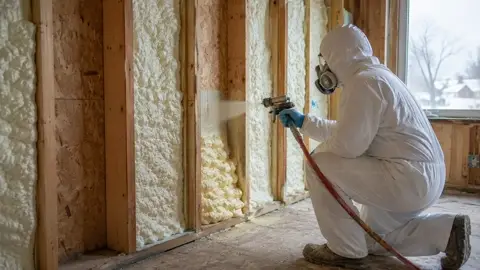
Spray Foam Insulation
Open and closed cell spray foam for attics, walls, and rim joists across Weld County.
Typical: $0.45-$1.50 per board foot installed
-
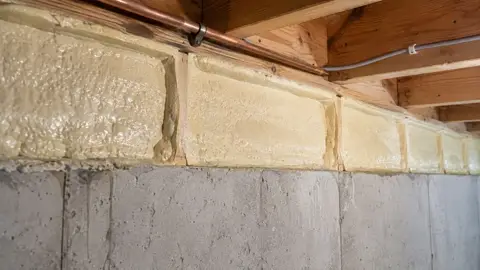
Closed Cell Spray Foam
R-6.5 to R-7 per inch with a built-in vapor barrier, for crawl spaces, rim joists, and metal buildings.
Typical: $1.00-$1.50 per board foot installed
-
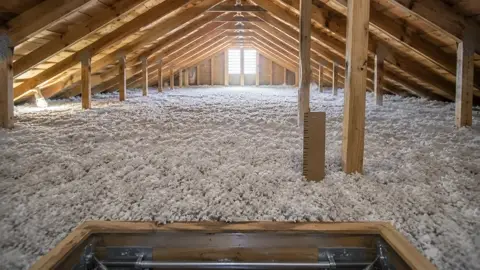
Attic Insulation
Bring older Greeley attics from R-19 up to the R-49 to R-60 Colorado actually needs.
Typical: $1,500-$4,000 typical whole-attic project
-
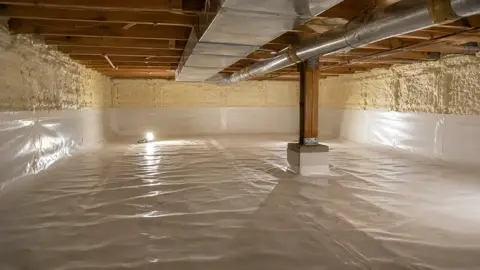
Crawl Space Insulation
Sealed, insulated crawl spaces that stop cold floors and frozen pipes.
Typical: $1,500-$6,000 typical project
-
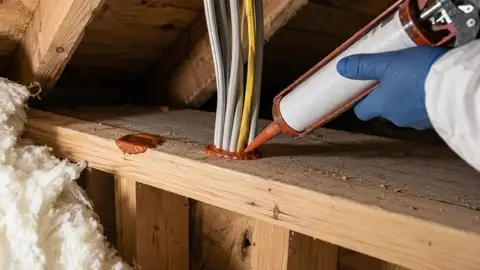
Attic Air Sealing
Close the gaps chinook winds find, the step that makes new insulation actually work.
Typical: $350-$1,500 typical project
-
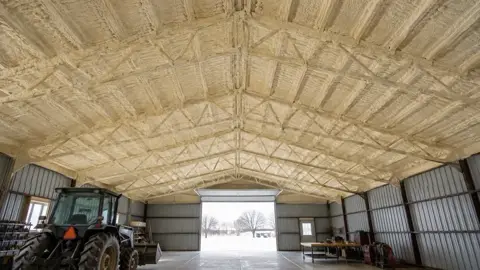
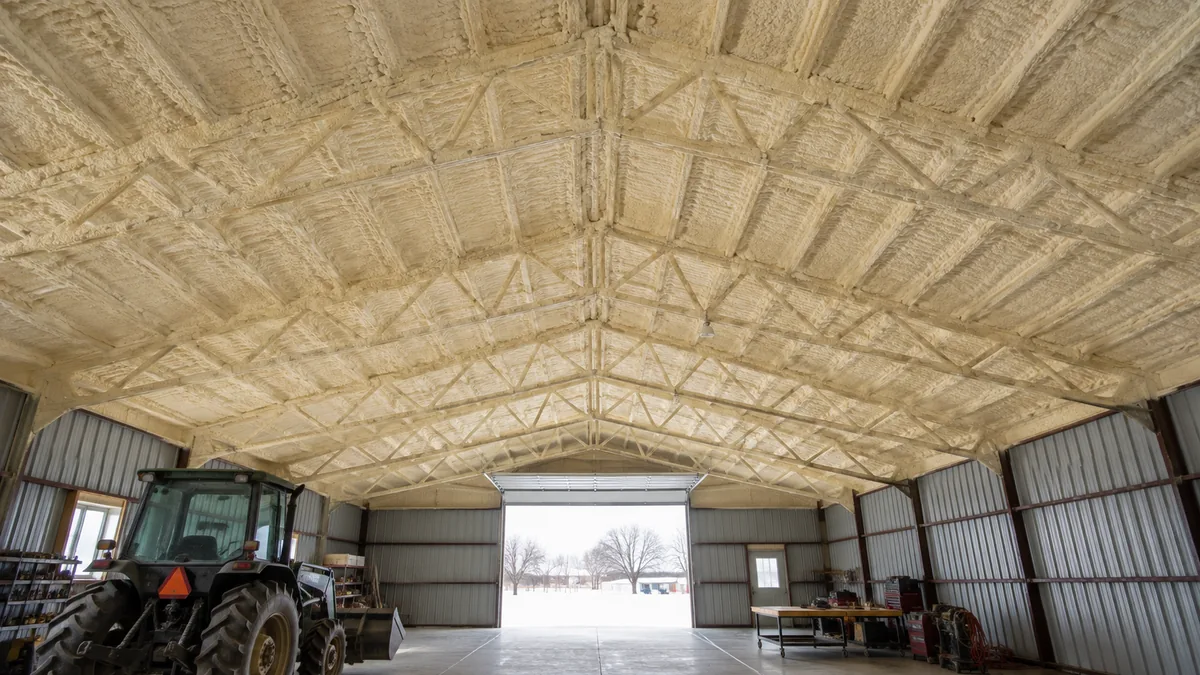
Metal Building Insulation
Spray foam for pole barns, shops, and ag buildings, ending condensation drip for good.
Typical: $1.00-$3.00 per sq ft for closed cell
-
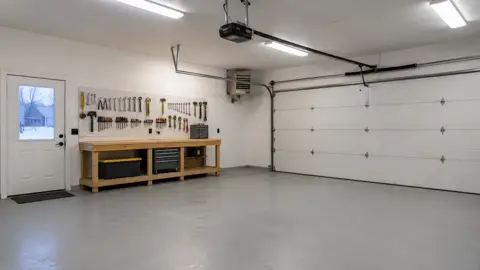
Garage Insulation
Make an attached or detached garage usable in January, and stop it from chilling the rooms above.
Typical: $800-$3,500 typical project
-
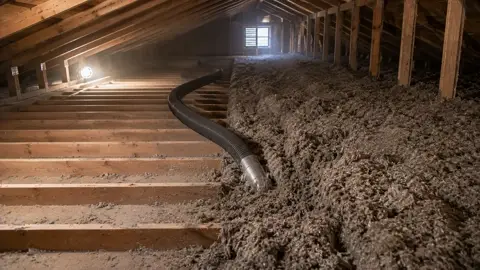
Insulation Removal
Safe removal of old, damaged, or pest-contaminated insulation before an upgrade.
Typical: $1.00-$2.00 per sq ft removed
-
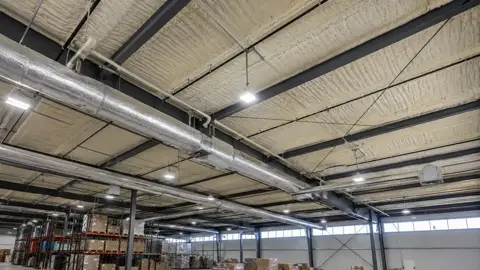
Commercial Insulation
Warehouses, shops, and light-commercial buildings across Greeley and Weld County.
Typical: quoted per project
The Greeley insulation services overview lays out which of these tends to pay back first on an older house.
Ready for a number? Have your attic square footage handy. Call (970) 414-2650
Blown-In Insulation Near Greeley
Greeley is the base, but the service area covers the whole county. Pick the town closest to you for what the job usually looks like there.
- Blown-In Insulation in Evans Highway 85 corridor
- Windsor insulation contractors newer high-end builds
- blown-in insulation for Eaton homes and shops Highway 85 farm town
- our Johnstown, CO service page I-25 corridor growth
- blown-in insulation near Milliken ag-and-commuter town
- what we handle in Severance one of Colorado's fastest-growing small towns
Calls also come in from Kersey, LaSalle, Ault, and Platteville, and the smaller places in between along Highway 85.
Get blown in insulation priced for your address
Tell us the room, the square footage, and what it is doing wrong. You get a straight price range on the phone and a firm quote after we look at it.
Call (970) 414-2650Greeley, Evans, Windsor, Eaton, Johnstown, Milliken, Severance, and Weld County.