
Mice in Blown-In Insulation: Signs, Risks, and Fixes
Someone hears scratching above the bedroom ceiling in October, opens the attic hatch, and finds trails carved through the blown-in insulation. It is a common scene in Greeley and rural Weld County. The answer is yes, and this guide covers which materials mice prefer, the signs to look for, and what fixing it costs.
Do mice actually live in blown-in insulation?
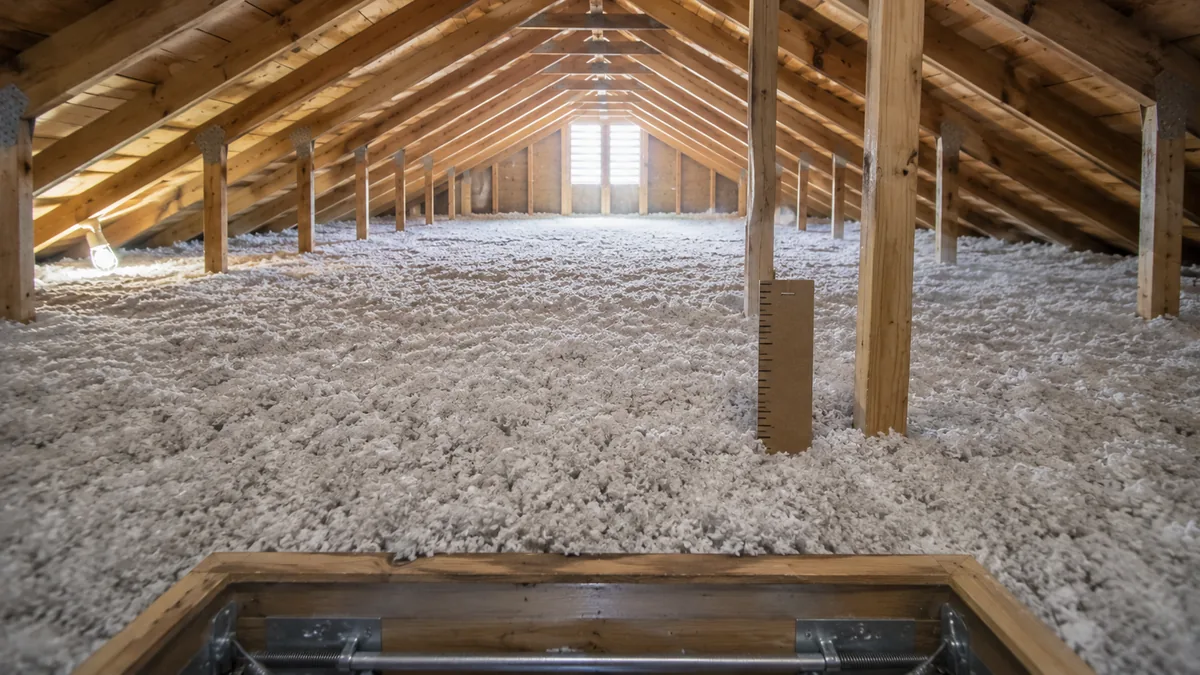
They do, and they prefer it. An attic gives a mouse everything it needs: warmth, darkness, no predators, and a deep soft layer to tunnel through and shred into bedding.
Weld County makes it worse than average. Fields, feedlots, and grain storage surround the towns, and when the first hard freeze hits, rodents move toward heated buildings. Farmhouses, shops, and older homes on the edge of town see it first.
No contractor should tell you an insulation product is rodent proof. The honest framing is that some materials are far better habitat than others, and that sealing entry points matters more than the material choice.
Which insulation do rodents prefer?
Loose fill materials are nesting material by definition. Foam is not. Here is how the common options compare.
| Material | Nesting appeal | Why |
|---|---|---|
| Blown-in cellulose | High | Soft, deep, easy to tunnel and nest in |
| Blown-in fiberglass | High | Irritating but still burrowed through and nested in |
| Fiberglass batts | High | Pulled apart and dragged into nests |
| Open cell spray foam | Low | Can be chewed, not useful as nesting material |
| Closed cell spray foam | Lowest | Rigid and dense, and it seals the entry gaps |
A frequent myth deserves correcting: fiberglass is not a rodent deterrent. Mice tunnel through it and nest in it routinely. And the borate in cellulose is there for fire resistance and insect control, not for rodents.
The material that helps most is closed cell spray foam, and it helps because it seals the openings rodents use, not because it repels them. That is the same reason attic air sealing is part of nearly every real fix.
What are the signs of mice in your attic insulation?
You can usually assess it yourself from the hatch with a flashlight. Look for these, in rough order of how bad the problem is.
- Droppings scattered on top of the insulation or along joist tops
- Trails and tunnels pressed through the loose fill
- Matted, compressed areas where the material has lost its loft
- Yellow or brown urine staining, often with a sharp ammonia smell
- Shredded paper, cardboard, or fabric gathered into a nest
- Chewed wire insulation, which is a fire concern, not just a pest one
Scratching sounds at night, especially in fall, back all of that up. Compacted insulation also stops performing: material that started at R-38 and has been matted flat may be delivering closer to R-20.
Found droppings and trails up there? Call (970) 414-2650
Why does contaminated insulation need to come out?
Two reasons, and the health one comes first. Rodent droppings and urine soak into porous material and stay there. Disturbing dry nesting debris sends particles into the air, which is why removal is done with containment, respirators, and a vacuum that exhausts outside.
The second reason is performance. Tunneled, matted, urine soaked insulation has lost its trapped air, and trapped air is the entire mechanism. Blowing fresh material on top of contaminated material buries the problem and the smell stays.
There is also a persistence issue. Rodent scent trails in old material signal to the next generation that the space is habitable, so removing it removes the invitation.
What does removal and re-insulation cost?
Insulation removal runs $1.00 to $2.00 per square foot in Northern Colorado, depending on depth, access, and how much contamination is present.
Putting new material back costs $1.00 to $2.80 per square foot for blown-in, and a typical whole attic project lands between $1,500 and $4,000 once it is brought to the R-49 to R-60 range Colorado calls for.
For a 1,200 square foot attic, that means roughly $1,200 to $2,400 to remove and clean, plus the new attic insulation on top. Most complete jobs of that size fall between $3,000 and $6,000. Air sealing while the deck is bare adds $350 to $1,500 and is the cheapest it will ever be, because every gap is visible.
How do you keep them from coming back?
Sequence matters. Exclusion first, then removal, then new insulation. Doing it in any other order means paying twice.
Exclusion means a pest professional finding and closing every entry: soffit and roof junctions, damaged gable vent screening, utility penetrations, and the gap around the flue. Anything a pencil fits through is an entry.
Once the building is closed and the old material is gone, new blown-in insulation or foam goes in on a clean deck. If you want to see what the replacement side costs on its own, the attic cost guide breaks it out line by line.
Rodents and insulation, answered
Do mice nest in blown-in cellulose?
Yes. Loose cellulose is soft, deep, and easy to tunnel through, which makes it good nesting habitat. Borate treatment in cellulose targets insects and fire resistance, not rodents, so it does not keep mice out.
Does spray foam keep mice out of an attic?
Cured foam is not nesting material and mice cannot burrow through closed cell foam the way they tunnel through loose fill. Determined rodents can still chew a path, so foam helps mainly because it seals the entry gaps, not because it repels anything.
Do I have to replace insulation after mice?
Light activity in one corner can sometimes be cleaned and spot repaired. Widespread droppings, urine staining, matted tunnels, or a lingering smell means the contaminated material comes out and new insulation goes back in.
How do mice get into an attic in the first place?
Through gaps a pencil fits into. Common entries are the roof to soffit junction, gable vents with damaged screening, plumbing and electrical penetrations, and the gap where a chimney or flue passes through the roof.
Attic air sealing and insulation guidance referenced from the U.S. Department of Energy: energy.gov. Rodent removal and exclusion is pest control work and should be handled by a licensed pest professional.
Get contaminated insulation out and R-value back in
Tell us the room, the square footage, and what it is doing wrong. You get a straight price range on the phone and a firm quote after we look at it.
Call (970) 414-2650Greeley, Evans, Windsor, Eaton, Johnstown, Milliken, Severance, and Weld County.