Spray Foam Insulation Red Flags, Handled Honestly
Search spray foam insulation and Google will suggest "red flag" before you finish typing. That phrase is doing real work, and it deserves a straight answer. This article is for Greeley and Weld County homeowners who like what foam promises but want to know what can go wrong first, so you can decide whether it belongs in your house.
Where did the red flag reputation come from?
Four separate concerns got compressed into one phrase: chemical exposure during installation, batches that cure wrong, moisture getting trapped in an assembly, and lenders in the United Kingdom growing cautious about foam on roof timbers.
Each of those is a genuine category of problem with a documented history. None of them describes correctly specified, correctly installed foam in a building that was dry to begin with. The useful move is to separate the material from the workmanship.
Is spray foam off-gassing a real concern?
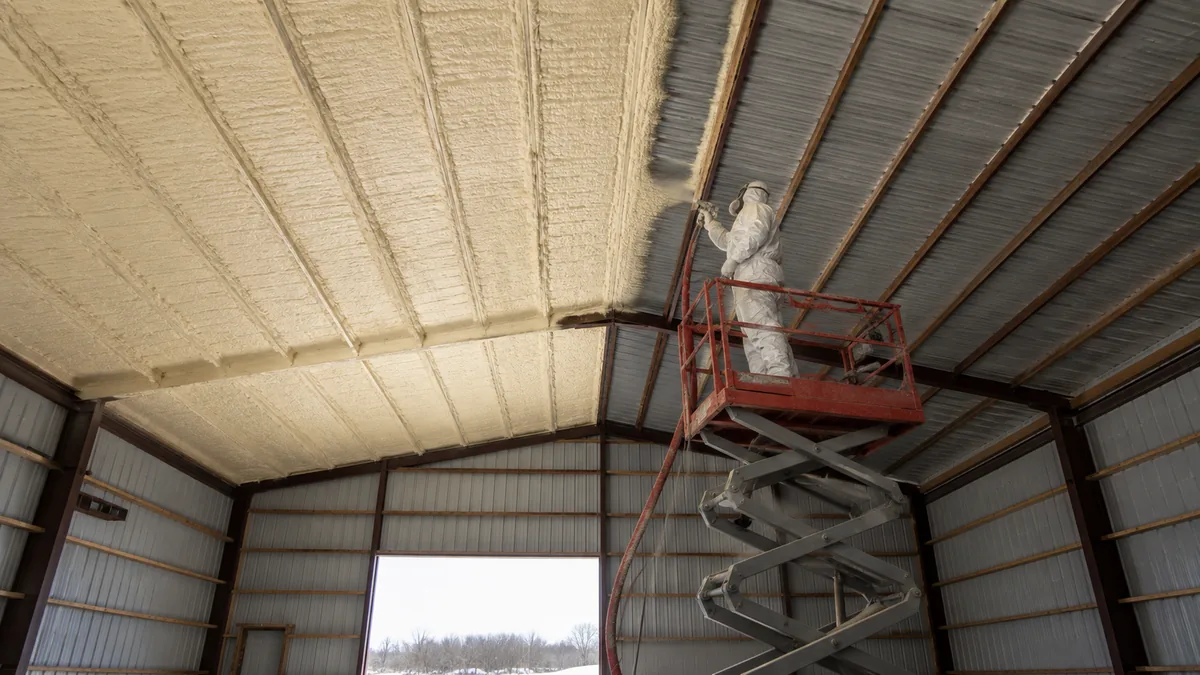
During application, yes. Spray polyurethane foam is mixed on site from two reactive chemical sides, and the reaction releases isocyanates and blowing agents. That is why installers wear supplied air respirators and full coveralls while spraying.
The industry standard is that occupants stay out of the work area during spraying and for a ventilation period afterward, commonly quoted at 24 hours for residential jobs. A crew that shrugs at that timeline is the actual red flag.
Once fully cured, the foam is an inert plastic. The problem cases you read about almost always trace back to a curing failure, not to properly cured material sitting quietly in a wall.
What happens when a batch cures wrong?
This is the horror story category, and it is worth understanding because it is entirely preventable. The two chemical sides have to be held within a temperature window, pumped at a precise ratio, and sprayed in controlled lift thicknesses.
Miss those conditions and the foam can stay tacky, shrink away from the framing, crumble, or hold a persistent fishy or chemical odor for months. Cold weather makes it worse, which matters on a January install in Weld County when the drums have been riding in an unheated trailer.
Fixing a bad batch means physically scraping it out, which is expensive and messy. Ask any bidder how they condition their chemical, what lift thickness they spray, and what they do differently below freezing. The answers tell you a lot.
Have questions about how a foam job should be run? Call (970) 414-2650
Can spray foam trap moisture in a roof or wall?
It can, and this is the most legitimate technical criticism. Closed cell foam is a vapor retarder at around two inches of thickness. That is exactly what you want against a crawl space wall and exactly what you do not want on an assembly designed to dry in that direction.
Foam over damp sheathing, a slow roof leak, or a plumbing drip does not cause the water. It hides it, and it removes the airflow that used to carry it away. Rot that would have shown up as a ceiling stain now happens where nobody can see it.
The prevention is unglamorous: fix leaks first, confirm the assembly can dry somewhere, and never spray wet wood. A crew that inspects the roof deck before quoting is doing this correctly.
Why do some lenders flag spray foam?
This concern comes almost entirely from the United Kingdom, where press coverage and lender policy converged on foam sprayed directly against the underside of older roof timbers. Surveyors could no longer inspect the wood, so some lenders declined to lend against the property until the foam was removed.
It is a real story, and it is a narrow one. The trigger was inspectability of historic timber roofs, not the chemistry. It is not a routine obstacle in United States residential lending.
Still, keep your paperwork. Product data sheets, the installed thickness, and photos before drywall make any future inspection or appraisal conversation short. That is good practice on any spray foam project regardless of where you live.
When is spray foam simply the wrong product?
There are honest cases where the answer is no. An open, walkable attic floor with room for sixteen inches of material is one: blown-in cellulose or fiberglass gets you to R-49 to R-60 for a fraction of what foam costs, and blown-in insulation is the better buy there.
A house with unresolved water intrusion is another. So is any assembly a building official or engineer says must dry toward the interior. Foam is permanent, and permanent is only good when the detail underneath it is right.
Where foam does win is where nothing else does the job: crawl spaces, rim joists, metal buildings, and shallow cathedral cavities. The fiberglass versus spray foam comparison lays out that choice side by side.
How do you avoid a bad spray foam job?
Ask for the specific product and its data sheet. Ask what thickness is being sprayed and what R-value that produces. Ask about re-entry timing in writing. Ask what happens to the price if the crew opens the attic and finds moisture.
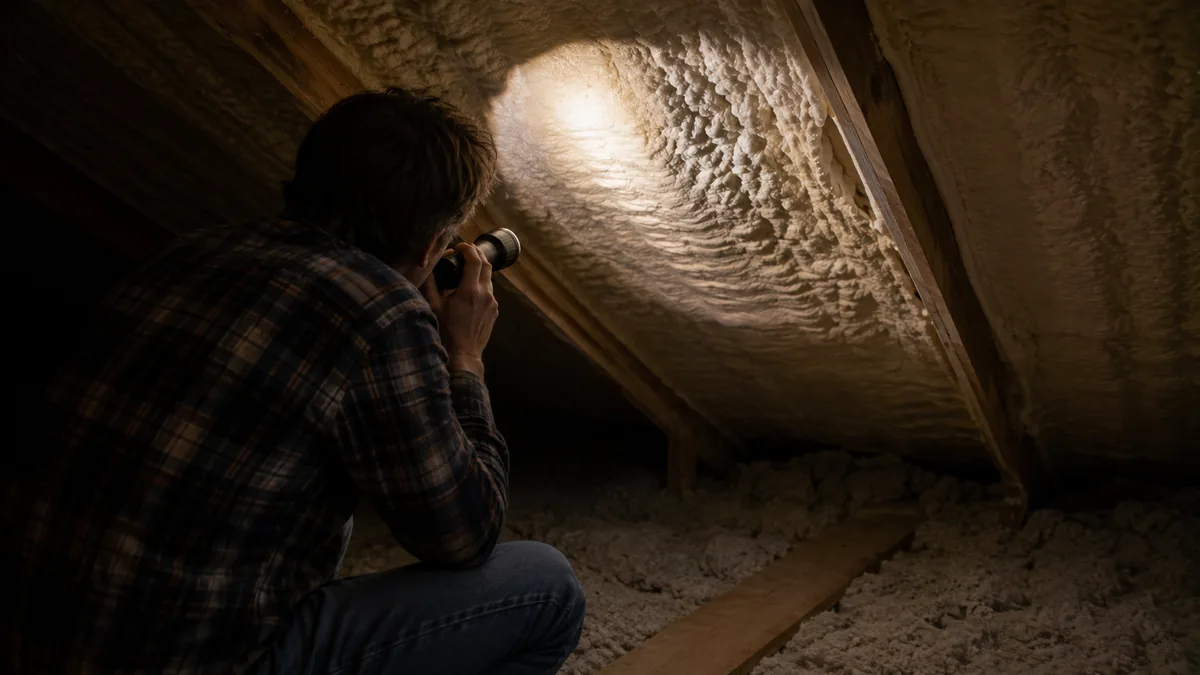
Then ask for a walkthrough before the drywall or the deck covers anything. Foam that is applied evenly, bonded tight to the framing, and trimmed flush looks obviously right. Foam that is lumpy, shrunken at the edges, or still soft does not.
Straight answers about spray foam concerns
Is spray foam insulation safe once it has cured?
Properly mixed, properly applied foam is inert once cured and is installed in millions of buildings. The risk window is during and shortly after application, which is why occupants leave the building and the crew ventilates it before anyone returns.
What is a bad batch of spray foam?
Spray foam is mixed on site from two chemical sides that must be kept at the right temperature and delivered at the right ratio. If either side is off, the foam can cure soft, shrink, pull away from framing, or keep releasing odor. Bad batches are an installation failure, not a property of the material.
Can spray foam cause a mortgage or appraisal problem?
Lender caution around foam has mostly been a United Kingdom story, tied to foam sprayed directly onto older roof timbers where surveyors could no longer inspect the wood. It is not a normal obstacle for a United States mortgage, but keeping your installation documentation makes any future inspection simpler.
When should I not use spray foam?
Skip it on wet framing, over an active leak, on an assembly that has to dry inward, and on an open attic floor where cheap blown-in material reaches R-49 to R-60 for far less money.
Ventilation and re-entry guidance for spray polyurethane foam is published by the U.S. Environmental Protection Agency and summarized alongside insulation material basics at energy.gov.
Ask the uncomfortable questions before you buy
Tell us the room, the square footage, and what it is doing wrong. You get a straight price range on the phone and a firm quote after we look at it.
Call (970) 414-2650Greeley, Evans, Windsor, Eaton, Johnstown, Milliken, Severance, and Weld County.