How Much Attic R-Value Does a Colorado Home Need?
The recommended attic R-value in Colorado is R-49 to R-60, and a large share of Greeley attics built before 1980 still sit near R-19. This guide explains what those numbers mean in inches, how to check your own attic in about five minutes, and what it takes to close the gap on a Weld County house.
What is the recommended attic R-value in Colorado?
Colorado's populated Front Range, including Greeley and all of Weld County, falls in DOE climate zone 5B: cold, dry winters and hot summers. The Department of Energy's recommendation for attics in that zone is R-49 to R-60 for an existing home.
R-value measures resistance to heat flow. Higher is slower. In an attic the number is cumulative, so eight inches of R-3.2 per inch material gives you roughly R-26 total, not R-3.2.
Weld County's climate makes the attic the highest leverage surface in the house. Heat rises, and a January night at five degrees with a fifty degree chinook afternoon two days later swings the load hard in both directions.
How many inches of insulation is R-49?
It depends entirely on the material. Every product carries a different R-value per inch, so depth is only meaningful once you know what you are looking at.
| Material | Depth for about R-49 | Depth for about R-60 |
|---|---|---|
| Blown-in fiberglass | about 14 to 16 in | about 17 to 19 in |
| Blown-in cellulose | about 13 to 15 in | about 16 to 18 in |
| Fiberglass batts | about 15 to 16 in stacked | about 18 to 19 in stacked |
| Open cell spray foam | about 13 to 14 in | about 16 to 17 in |
| Closed cell spray foam | about 7 to 8 in | about 9 to 10 in |
Closed cell spray foam reaches the target in half the depth of anything else because it runs R-6.5 to R-7 per inch against roughly R-3.5 for open cell and blown-in products. That density costs more per inch, which is why most open attic floors get blown-in material instead.
Not sure what is up there or how deep it goes? Call (970) 414-2650
How do I check the R-value of my own attic?
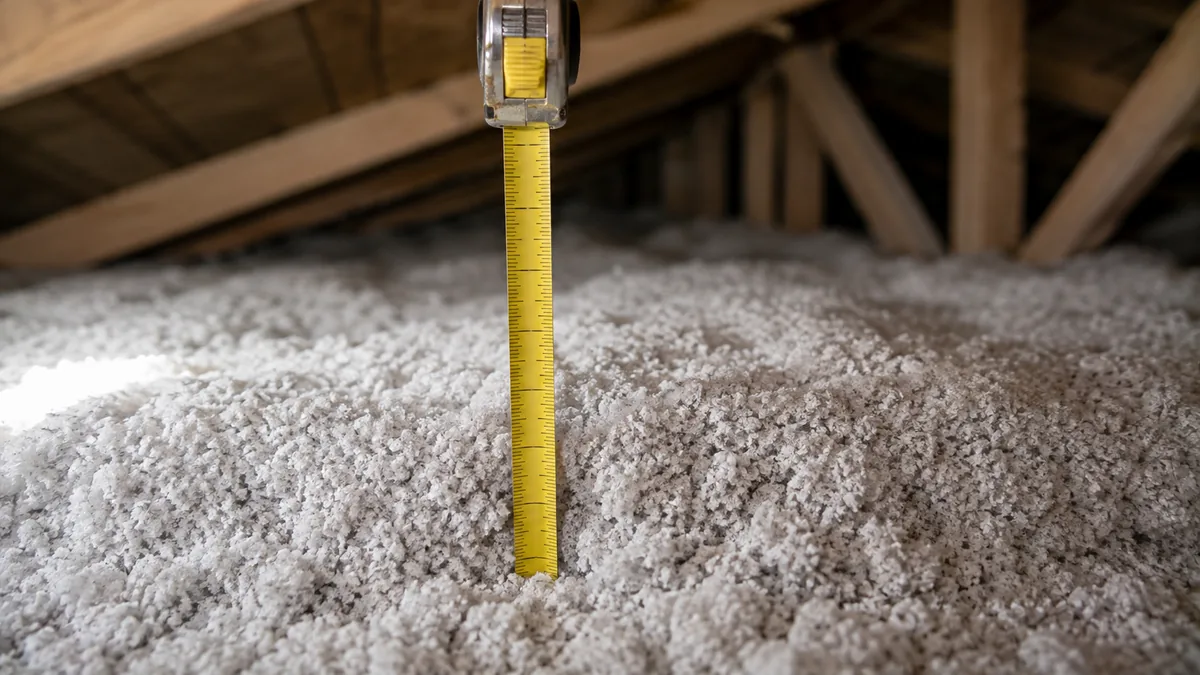
Open the hatch, shine a light, and take two readings. First, measure the depth of the loose material with a ruler pushed down to the drywall. Second, note the color and texture.
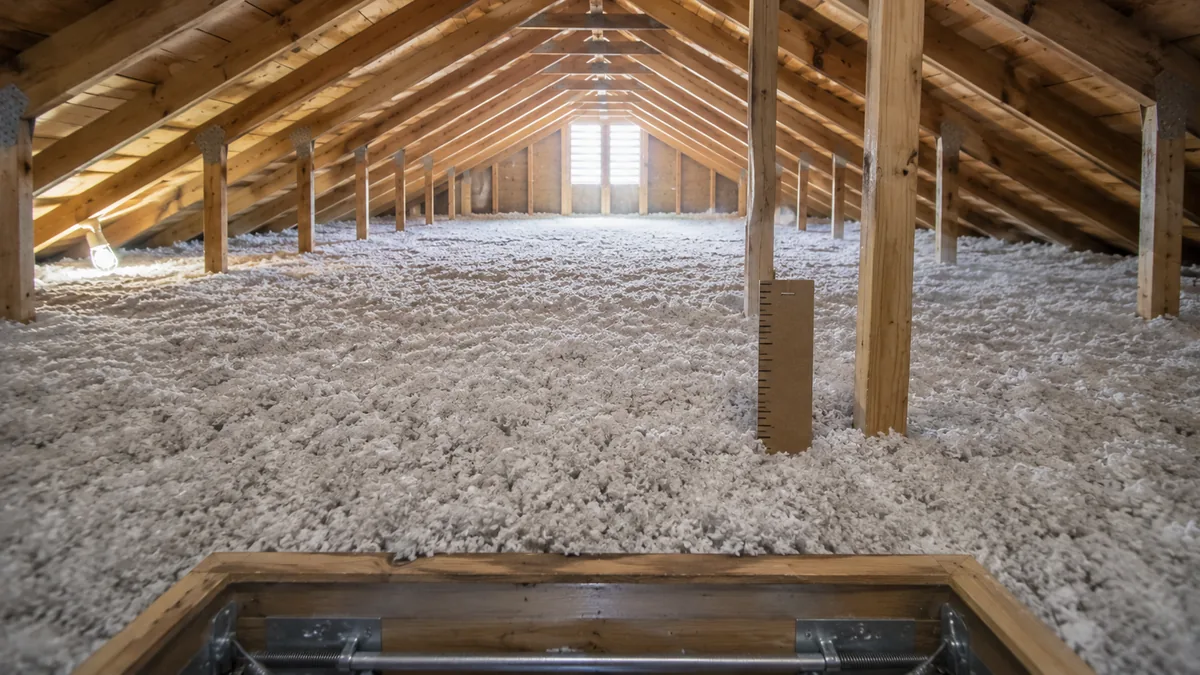
Gray or brown shredded paper is cellulose, roughly R-3.2 to R-3.8 per inch. Yellow, pink, or white fluff is fiberglass, roughly R-2.2 to R-2.7 per inch when blown. Silver gray pebbles are vermiculite, which needs testing before anyone disturbs it.
Multiply depth by the per inch figure and you have a fair estimate. Eight inches of blown fiberglass is around R-20. That is a common reading in the Union Colony era neighborhoods near downtown Greeley and around UNC, and it is roughly forty percent of the current target.
If the number lands under R-30, an attic insulation upgrade is the highest return work available on the house.
What does it cost to reach R-49 in Greeley?
Blown-in attic work runs $1.00 to $2.80 per square foot installed in Northern Colorado, and a typical whole attic project lands between $1,500 and $4,000 depending on square footage, existing depth, and access.
Removing old, contaminated, or soaked material adds $1.00 to $2.00 per square foot. Air sealing the ceiling plane first adds $350 to $1,500 and is the step that makes the new R-value behave like the label claims.
Line item ranges and a worked example for a 1,000 square foot attic are in the attic insulation cost guide for Greeley. Federal 25C credits and Xcel Energy rebates can reduce what you actually pay, covered in the 2026 tax credit article.
Does adding R-value fix ice dams and cold rooms?
Partly. R-value slows heat flow, but it does not stop air from moving. If warm indoor air is streaming past can lights, the bath fan, and the top plates of interior walls, that air carries heat into the attic no matter how deep the insulation is.
That is why real projects seal first and insulate second, and why a house with brand new R-60 can still grow ice dams if the air leaks were skipped. More on that pattern in the Greeley ice dam guide.
Attic R-value questions Colorado homeowners ask
What R-value should an attic have in Colorado?
R-49 to R-60. Colorado sits in DOE climate zone 5B, and that is the recommended range for attics in an existing home. New construction in most Front Range jurisdictions is built to R-49 or better.
How many inches of insulation is R-49?
Roughly 14 to 16 inches of blown-in fiberglass, 13 to 15 inches of blown-in cellulose, or about 7 to 8 inches of closed cell spray foam. Settled older material measures far less than its label suggests, so measure depth rather than trusting the original spec.
Can you add new insulation on top of old insulation?
Usually yes. Blowing fresh material over dry, undamaged existing insulation is standard practice and the cheapest way to reach R-49. Old insulation that is wet, moldy, rodent contaminated, or hiding unsealed air leaks needs to come out first.
Is R-60 worth it over R-49?
The jump from R-19 to R-49 is where nearly all of the savings live. Going from R-49 to R-60 adds a smaller amount of comfort and a smaller bill reduction, but the extra material is cheap once the crew and the hose are already on site.
Zone recommendations referenced from the U.S. Department of Energy's insulation guidance: energy.gov.
Find out where your attic actually stands
Tell us the room, the square footage, and what it is doing wrong. You get a straight price range on the phone and a firm quote after we look at it.
Call (970) 414-2650Greeley, Evans, Windsor, Eaton, Johnstown, Milliken, Severance, and Weld County.